Tuesday, 7 April 2020
America Will Collapse In 2020
Within the next few weeks, he U.S. stock market will crash and bring down the entire economy with it. Theres nothing we can do to stop it. The only thing to do is prepare for a revolution afterwards. The Alt-Right has a crucial role to play in this. We can be powerful leaders, if we adopt the right strategy.

Wednesday, 18 March 2020
Americas next depression
The coronavirus is turning out to be the black swan event of 2020. Thanks to the regular international flights that are a staple of globalisation, the virus was able to spread outside of China and become a global pandemic that threatens to kill millions of people. The death toll rises steadily each and every day, as the number of infected continue to climb. The West was extremely reluctant to close their borders and shut down international flights, due to the negative impact it would have on trade and tourism. They were more worried about the economy than their own people, in a perfect snapshot of our amoral cultural values. This gave the coronavirus a window of opportunity to pass into Europe and North America, gaining a presence in both continents. By the time Western leaders finally decided to bite the bullet and shut down the borders, it was already too late. The only course of action left was to order people to self-isolate, in the hopes that the rate of infection could be slowed down.
As long as the number of victims doesn't exceed the capacity of hospitals to treat, then the death toll can be kept from spiraling out of control. But the obvious consequence of a quarantine is that the crisis will now last much longer than Western governments had anticipated. With millions of people stuck at home, their economys are slowly coming to a standstill. The growth in GDP that they care so much for has now been thrown to the wayside. And that isn't the only problem. In America, a crisis is now taking place in the stock and bond market as investors liquidate their assets and pull their money out of the system. The losses that have taken place this week are historic in every sense of the word. This is portent of untold disaster. In the last few years, American corporations have taken advantage of very-low interest loans from the Federal Reserve, and used the money to increase the value of their stocks. They have racked up a record amount of debt in the process, creating a bubble-type situation in a frightening repeat of the 2008 crash.
Wall Street has clearly shown that they have learned nothing from that episode, which bankrupted millions of people and threw the entire country into a prolonged recession. If things do not change course quickly, then there is every possibility that another financial crash will happen this year. Americas economy was already in a weakened position due to decades of bad monetary policy, combined with profligate spending on social programs, the military, and imperialistic wars. The fear and uncertainty spread by the coronavirus may very well prove to be the straw that broke the camels back. The Federal Reserve is largely responsible for creating this crisis, due to its constant monetary intervention that keeps the market addicted to ultra-low interest loans. They and Wall Street are partners in crime that are putting the entire country at risk.
As long as the number of victims doesn't exceed the capacity of hospitals to treat, then the death toll can be kept from spiraling out of control. But the obvious consequence of a quarantine is that the crisis will now last much longer than Western governments had anticipated. With millions of people stuck at home, their economys are slowly coming to a standstill. The growth in GDP that they care so much for has now been thrown to the wayside. And that isn't the only problem. In America, a crisis is now taking place in the stock and bond market as investors liquidate their assets and pull their money out of the system. The losses that have taken place this week are historic in every sense of the word. This is portent of untold disaster. In the last few years, American corporations have taken advantage of very-low interest loans from the Federal Reserve, and used the money to increase the value of their stocks. They have racked up a record amount of debt in the process, creating a bubble-type situation in a frightening repeat of the 2008 crash.
Wall Street has clearly shown that they have learned nothing from that episode, which bankrupted millions of people and threw the entire country into a prolonged recession. If things do not change course quickly, then there is every possibility that another financial crash will happen this year. Americas economy was already in a weakened position due to decades of bad monetary policy, combined with profligate spending on social programs, the military, and imperialistic wars. The fear and uncertainty spread by the coronavirus may very well prove to be the straw that broke the camels back. The Federal Reserve is largely responsible for creating this crisis, due to its constant monetary intervention that keeps the market addicted to ultra-low interest loans. They and Wall Street are partners in crime that are putting the entire country at risk.
Monday, 20 January 2020
Virginia gun rights rally
Virginia has been the focal point for alot of tensions in the past month. In December, a bill that would outlaw the possession of semi-automatic weapons was passed. The bill was sponsored by governor Ralph Northam, among others. This action infuriated gun owners throughout Virginia. In response, over 75 counties announced that they would not comply with the gun ban. Supporters of the bill did not care about the opposition of local Sheriffs. They simply warned that the National Guard would be mobilised if the Police refused to enforce the ban. Things have only gotten worse since then.
Today, a rally is scheduled to take place in the capital of Virginia. It will be attended by thousands of gun owners who are angered by the infringement of their rights. Some of the protestors are from out of state. The media has attempted to stir controversy by hyping storys about a group of white supremacists who planned to attend the rally. They are clearly trying to depict all supporters of the 2nd amendment as racists. The governor tried to forestall the protests by declaring a state of emergency.
There are worrying signs that the the rally could turn violent. Antifa was planning to infiltrate the protests, undoubtedly in the hopes that they could cause trouble and make the gun rights supporters look bad. There were also mysterious advertisements by another group, who were looking for 'crisis actors' in the Virginia area. Apparently, there are alot of people who would love to see the protests devolve into chaos.
Today, a rally is scheduled to take place in the capital of Virginia. It will be attended by thousands of gun owners who are angered by the infringement of their rights. Some of the protestors are from out of state. The media has attempted to stir controversy by hyping storys about a group of white supremacists who planned to attend the rally. They are clearly trying to depict all supporters of the 2nd amendment as racists. The governor tried to forestall the protests by declaring a state of emergency.
There are worrying signs that the the rally could turn violent. Antifa was planning to infiltrate the protests, undoubtedly in the hopes that they could cause trouble and make the gun rights supporters look bad. There were also mysterious advertisements by another group, who were looking for 'crisis actors' in the Virginia area. Apparently, there are alot of people who would love to see the protests devolve into chaos.
Wednesday, 1 January 2020
The Misandry Bubble
On this day exactly ten years ago, one of the most important articles ever written about the sexual marketplace was published. The Misandry Bubble diagnosed many of the dysfunctions that have been (and still are) plaguing Western society. Most of these diseases can be traced back to the sexual revolution of the 1960s, which fundamentally changed an ancient human tradition. Feminism led to large numbers of women joining the work force, and putting careers before marriage or family. This resulted in a decline in the marriage rate and fertility rate, among other things. No fault divorce and alimony led to the devaluation of marriage itself, as ex-wives selfishly used it to enrich themselves at the expense of their ex-husbands. Widespread contraception made it possible for women to become more promiscuous than ever, which consequently impaired their ability to pair-bond and remain faithful. This explains why most marriages don't last beyond 5 years, as divorce is usually initiated by a bored wife. (An astute observer may notice how these forces tend to amplify each other in a reinforcing loop) All of these dysfunctions have led to the grotesque warping of the sexual marketplace into its current state.
The Misandry Bubble goes into great detail about how important the institution of marriage is to the fabric of society. Marriage is a very old tradition, dating back to the Sumerians of 5000 years ago. In a very real sense, it is a pre-requisite for civilisation itself. Without a marriage culture, there is no way that humans of different ages, genders, and social status can cohesively work together. Without it, there is no incentive for lower status beta males to work hard and contribute to society as a whole. Traditionally, the only reliable way to motivate men to be economically productive was to promise them a young, chaste wife to marry and support. But this contract was destroyed in the aftermath of the sexual revolution. Most men at the time didn't understand that the rules had fundamentally changed. They upheld their traditional obligations even while women flagrantly ignored their obligations. This led to the formation of a cargo cult, where beta males continued to work long and hard in the (invalid) expectation that they would eventually find a good woman to marry. The good men were never told the truth by society, much less by dishonest women.
But over the past decade, legions of men have slowly been waking up to the racket they have been suckered into. They have realised that it is not necessary to spend large sums of money on a ring or a wedding. They have understood that they are better off not entering into a marriage contract at all, lest they run the risk of losing everything in a divorce. (Or having their reputation destroyed by false accusations) Even more importantly, men have realised that they do not need to earn a high income in order to attract women. By learning the art of attraction, they can easily get by on a lower income. This explains why so many young men are economically disengaged. They are becoming aware just how deeply they were lied to about everything. As the blogger Roissy said, the goal of feminism is to maximize the number of restrictions on men and to minimize the number of restrictions on women. This gradual shift in perception will have huge implications in the near future.

Addendum
The Misandry Bubble has created an environment which is very hostile to young, low status men. They are devalued and mistreated by an uncaring society, and given no incentive whatsoever to become economically productive. (The severe shortage of marriable women only worsens this phenomenon) Large numbers of men have thus become ghosts, playing no active role in society. This results in a gradual weakening of the entire civilised world, particularly in North America and Europe. Civilisation thus becomes more vulnerable to the convergence of existential threats.
The Misandry Bubble goes into great detail about how important the institution of marriage is to the fabric of society. Marriage is a very old tradition, dating back to the Sumerians of 5000 years ago. In a very real sense, it is a pre-requisite for civilisation itself. Without a marriage culture, there is no way that humans of different ages, genders, and social status can cohesively work together. Without it, there is no incentive for lower status beta males to work hard and contribute to society as a whole. Traditionally, the only reliable way to motivate men to be economically productive was to promise them a young, chaste wife to marry and support. But this contract was destroyed in the aftermath of the sexual revolution. Most men at the time didn't understand that the rules had fundamentally changed. They upheld their traditional obligations even while women flagrantly ignored their obligations. This led to the formation of a cargo cult, where beta males continued to work long and hard in the (invalid) expectation that they would eventually find a good woman to marry. The good men were never told the truth by society, much less by dishonest women.
But over the past decade, legions of men have slowly been waking up to the racket they have been suckered into. They have realised that it is not necessary to spend large sums of money on a ring or a wedding. They have understood that they are better off not entering into a marriage contract at all, lest they run the risk of losing everything in a divorce. (Or having their reputation destroyed by false accusations) Even more importantly, men have realised that they do not need to earn a high income in order to attract women. By learning the art of attraction, they can easily get by on a lower income. This explains why so many young men are economically disengaged. They are becoming aware just how deeply they were lied to about everything. As the blogger Roissy said, the goal of feminism is to maximize the number of restrictions on men and to minimize the number of restrictions on women. This gradual shift in perception will have huge implications in the near future.

Its going to be Biblical
Addendum
The Misandry Bubble has created an environment which is very hostile to young, low status men. They are devalued and mistreated by an uncaring society, and given no incentive whatsoever to become economically productive. (The severe shortage of marriable women only worsens this phenomenon) Large numbers of men have thus become ghosts, playing no active role in society. This results in a gradual weakening of the entire civilised world, particularly in North America and Europe. Civilisation thus becomes more vulnerable to the convergence of existential threats.
Sunday, 29 December 2019
Sven Ortmann goes full retard
After years of leaning indecisively on the fence, the German military blogger finally decided to get onboard with the far left. Herr Ortmann displays all the signs of Trump derangement syndrome in a psychotic rant on his blog. He blames the political divide in America entirely on the Republicans, and completely absolves the Democrats of any wrongdoing. He willfully ignores the fact that most media corporations in America are run by liberals. Herr Ortmann also criticises the Republican party for being 'overwhelmingly white', which makes it absolutely clear he is drinking the SJW coolaid.
He asserts that America is not a Western country: It is in fact a Fascist Dictatorship, and a threat to the entire world. At the end of his deranged post, the military blogger than announces that it is time for all of Europe to band together against America and prepare for a potential war in the near future. This is perhaps the most outrageous comment that he has ever made in his career. No response can adequately address such lunacy.
It is a shame to see a once great man fall to such depths. I had deep respect for him in the past, and considered him to be a military genius without equal. But unfortunately, his politics were always totally off the deep end. He and I had a falling out over the muslim refugee crisis, where we both said things that can never be taken back. I used to call him Sven, almost like a friend. But now, I will only call him Herr Ortmann.
P.S. If you are by chance reading this, then I wish you all the best in your deranged crusade against America. But take caution, for you may end up creating the very thing you wish to destroy. Men often meet their fate on the road they took to avoid it.
He asserts that America is not a Western country: It is in fact a Fascist Dictatorship, and a threat to the entire world. At the end of his deranged post, the military blogger than announces that it is time for all of Europe to band together against America and prepare for a potential war in the near future. This is perhaps the most outrageous comment that he has ever made in his career. No response can adequately address such lunacy.
It is a shame to see a once great man fall to such depths. I had deep respect for him in the past, and considered him to be a military genius without equal. But unfortunately, his politics were always totally off the deep end. He and I had a falling out over the muslim refugee crisis, where we both said things that can never be taken back. I used to call him Sven, almost like a friend. But now, I will only call him Herr Ortmann.
P.S. If you are by chance reading this, then I wish you all the best in your deranged crusade against America. But take caution, for you may end up creating the very thing you wish to destroy. Men often meet their fate on the road they took to avoid it.
Thursday, 14 November 2019
Canadian immigration
Canada is a nation that is sorely lacking in common sense. This deficiency was highlighted by the controversy over Don Cherrys remarks on Remembrance day, about the lack of respect shown by new immigrants. The fact that there was any controversy at all about this shows precisely what is wrong with Canada today. The loathsome fog of multi-culturalism has blinded people, preventing them from seeing the obvious. When it comes to the preservation of society, people seem to have adopted the belief that all citizens have an equal amount of skin in the game. This is nonsense. A family that only recently immigrated to Canada has much less stake in its well being than a family that has lived there for generations. That is common sense. The new immigrants have contributed nothing to society, so they have no real stake in it. This is doubly true if they are not of European ancestry. They don't know or care about the World Wars. Their ancestors never fought in WW1 or WW2, so it means nothing to them. The fact that they don't show respect on Remembrance day is completely unsurprising.
They didn't invest either sweat or blood in Canada. They didn't help to build the country, they simply migrated to it and indulged in its prosperity. Mass immigration from continents other than Europe are fraught with problems such as these. The absence of a shared history is a difficult problem to overcome, especially when society is so blind that it can't even see the problem. No action will be taken to fix this disconnect, and so it will inevitably become worse over time. Canadians have no one but themselves to blame for this situation. They were responsible for the astounding display of stupidity during the elections, when they voted Justin Trudeau into office for a second term. They forfeited their right to prosperity when they voted for a traitorous criminal who vowed to flood the country with more immigrants from the 3rd world. That means there will be more people who have a disconnect with Canada, people who don't know the meaning of Remembrance day.
They didn't invest either sweat or blood in Canada. They didn't help to build the country, they simply migrated to it and indulged in its prosperity. Mass immigration from continents other than Europe are fraught with problems such as these. The absence of a shared history is a difficult problem to overcome, especially when society is so blind that it can't even see the problem. No action will be taken to fix this disconnect, and so it will inevitably become worse over time. Canadians have no one but themselves to blame for this situation. They were responsible for the astounding display of stupidity during the elections, when they voted Justin Trudeau into office for a second term. They forfeited their right to prosperity when they voted for a traitorous criminal who vowed to flood the country with more immigrants from the 3rd world. That means there will be more people who have a disconnect with Canada, people who don't know the meaning of Remembrance day.
Sunday, 1 September 2019
80th anniversary: World War 2
Today marks the 80th anniversary since the beginning of World War 2, when the simmering tensions between Germany and Poland boiled over into war. The true nature of these tensions remain unclear to the wider public, shrouded in mystery. To be sure, the two countrys have a long history of antagonism and mistrust that always made diplomacy difficult. During the 1700s, Polands territory was gradually partitioned up by the Russian, Prussian, and Austrian empires. By 1795, all of their territory had been annexed, and they no longer existed as a sovereign state. The Poles spent the next 123 years living as subjects of other nations, which made them deeply resentful (particularly towards the Germans). When Poland regained statehood in 1918, they had developed a xenophobic and jingoistic mindset. The people wanted to get medievil and settle old scores with their neighbors. Fortunately, they were led by a capable statesman in the form of Jozef Pilsudski, who was able to reign in his peoples aggression and maintain cordial relations with Germany. When Adolf Hitler came to power in 1933, the two countrys actually signed a non-aggression pact, and things seemed to be moving in a peaceful direction. Unfortunately, these developments were undone by Pilsudksis death in 1935, and his replacement by the virulent nationalist, Edward Rydz-Smigly. His mindset was more representative of the average Pole, favoring an aggressive approach towards Germany. Bombastic speechs and hateful propaganda became common in Poland.
http://www.wintersonnenwende.com/scriptorium/english/archives/articles/wrsynopsis.html
http://www.weeklyuniverse.com/2003/poland.htm
https://carolynyeager.net/hitlers-final-offer-polands-josef-beck
Tuesday, 30 April 2019
Americas next financial crisis
Anyone who knows about the practises of the federal reserve (which includes fractional reserve banking, the creation of fiat currency, etc) knows that Americans entire financial system is fundamentally unstable. This fraudulent banking institute had its genesis in 1913, and is controlled by private interests (not the government). Since then, they have systemically undermined the purchasing power of the U.S. dollar through incessant inflation. More importantly, the system through which the federal reserve monetises debt -through the purchase of treasury bills- has led to the explosive increase of Americas national debt. It is mathematically impossible to repay this debt, and will eventually cause an catastrophic economic collapse. The 'easy money' that became available with the advent of quantitative easing has encouraged many corporations in America to make reckless financial decisions, all in the interest of short term profit. This has made the entire nations economy volatile and unstable. A bubble waiting to burst.
Which Sector Is The Pin That Pricks The Everything Bubble?
Dystopia California: Window to Americas Future
Wednesday, 23 January 2019
RE: On German tank armor
This is the third and final response that will be made to the gaming blog, For The Record. They have written alot of misleading articles on the subject of WW2, so its only natural that they are made the target of a thorough debunking. FTR has been used as a platform to spread revisionist history to unsuspecting readers. One of the main culprits is the individual known as EnsignExpendible. He is a Russian emigre who owns the Red Army themed blog, TankArchives. In theory, the website is supposed to be a neutral resource that translates Soviet reports from WW2. In practise, however, these memos are often selectively filtered and interpreted, and are accompanied with unnecessary opinions from the author. TankArchives consistently exaggerates the performance of the Red Army during 'the great patriotic war', while deflating the performance of the Heer it fought against. This theme is present in nearly every single article featured on the website. When expounding his propaganda on FTR, EnsignExpendible makes extensive usage of his own blog to buttress his faulty arguments. He misrepresents the war on the eastern front to such an extent that it no longer bears any resemblance to reality.
Moreover, he has repeatedly been shown to be dishonest, mendacious, and exceptionally ignorant on certain subjects. In his whopper of an article, the Ensign seeks nothing less than to single handedly rewrite the entire historical consensus about Germanys tanks. His thesis is that from the beginning of the war to the end, the Reich was consistently churning out tanks with substandard armor. He rejects the mainstream theory that their armor quality only declined late in the war. TankArchives theory is that -get this- it was of low quality right from the start. How he came to this preposterous conclusion is anyones guess. In any event, his thesis is built on a mountain of stupidity, ignorance, and hasty generalisations. His poor understanding of metallurgy and ballistics has been demonstrated before, and this article will prove to be no exception. TankArchives has created a Potemkin village that gives off the illusion of strength and soundness where there is none. Much like the Soviet Union itself, it is a colossus that will shatter under the weight of its own inconsistencys.

Moreover, he has repeatedly been shown to be dishonest, mendacious, and exceptionally ignorant on certain subjects. In his whopper of an article, the Ensign seeks nothing less than to single handedly rewrite the entire historical consensus about Germanys tanks. His thesis is that from the beginning of the war to the end, the Reich was consistently churning out tanks with substandard armor. He rejects the mainstream theory that their armor quality only declined late in the war. TankArchives theory is that -get this- it was of low quality right from the start. How he came to this preposterous conclusion is anyones guess. In any event, his thesis is built on a mountain of stupidity, ignorance, and hasty generalisations. His poor understanding of metallurgy and ballistics has been demonstrated before, and this article will prove to be no exception. TankArchives has created a Potemkin village that gives off the illusion of strength and soundness where there is none. Much like the Soviet Union itself, it is a colossus that will shatter under the weight of its own inconsistencys.
TankArchives and his Soviet
propaganda victory
The stupendous claim
Panzer III and Panzer IV armor
TankArchives mentions a test involving the Soviet 45mm anti-tank gun, which was used against three vehicles: The Stug III, the Panzer III, and the Panzer IV. He has no scorn for how the Stug IIIs armor performed, but is quite disparaging of the other two tanks. ''Then the PzIII is swapped in, and the performance is absolutely abysmal. Huge cracks from the same anaemic 45 mm peashooter, the front armour plate falls off, breaches up to 120 mm in size form... The PzIV doesn’t do much better.'' Lets take a look at the article in question and see whether he is giving an accurate description.
-The Panzer III being tested is an Ausf. H, which has 30mm applique armor on top of its 30mm base armor. Two shots against the front failed to penetrate, but do knock the applique armor loose. Afterwards, more shots are fired against the turret and hull side. One of them penetrates the turret hatch, opening a crack in the armor. Two of them penetrate into the hull, striking near the turret platform and opening another crack in the armor. On its face, this seems to prove TankArchives assertion that the armor was brittle.
-The Panzer IV being tested is an Ausf. H, which has 20mm applique armor on top of its 30mm base armor. Three shots against the front fail to penetrate, but do open up cracks on the back side of the armor. Afterwards, more shots are fired against the turret side. Several penetrations are scored, but there is no cracking. Repeated hits knock the applique armor loose. Overall, these results seems to validate TankArchives belief that the the Panzer IVs armor wasn't much better than the Panzer III. But these are only first impressions!
In order to determine whether or not the plates were acting in a brittle or ductile manner, we need to know something about armor failure modes. This is a complicated subject that is also influenced by the type of projectile that strikes the armor. (In this instance, the 45mm anti-tank gun fired uncapped, blunt nosed shells) What will a deeper examination of these test results show?
First, lets look at the hits against the Panzer IV. The claim that cracking on the back face of the armor indicates brittleness is not true. What we're actually seeing is evidence of something called a star crack. These are associated with the initial stages of a ductile failure mode, either ductile hole growth or petaling. But in this incident, the 45mm shells ran out of energy before they could penetrate. This is not a sign that the Panzer IVs armor was brittle.
Next, lets look at the hits against the Panzer III. The claim that the front armor had fallen off is misleading, as this was merely the applique armor being knocked loose. And as for the cracking of the side armor, its interesting to note where these cracks occurred. The shells struck near stress points like the turret hatch and the turret platform. Hatchs are known to act as stress concentrators that allow cracks to propagate unimpeded for large distances. This is not a sign that the Panzer IIIs armor itself was brittle.

Quotes from Heinz Guderian
In a final bid to solidify his theory, TankArchives attempts to show his readers that German armor was running into quality problems even in late 1941. He provides a quote from Heinz Guderians book to prove this: ''Frontline officers suggested that we should build tanks exactly like the T-34 in order to correct the unpleasant position of our armoured forces, but this position did not receive support from the engineers... Additionally, our hardened steel, whose quality was dropping due to a lack of natural resources, was inferior to the Russians' hardened steel.'' That almost sounds convincing... However, its important to keep in mind that this quote comes from a Russian translation of the book.
In the German and English translation of his book, Guderian didn't say anything about the quality of German armor deteriorating. What he actually says is this: ''The officers at the front were of the opinion that the T34 should simply be copied, since this would be the quickest way to put to rights the most unhappy situation of the German panzer troop: but the designers could not agree to this... Also, as far as steel alloys went, we were at a disadvantage compared to the Russians owing to our shortage of raw materials.'' [4] In his own words, therefore, Guderian believed that resource shortages made it impractical to copy the armor composition of the T-34 tank.
So really, his comment has nothing to do with the 'inferiority' of German armor. Guderians concern lay with the perceived superiority of Soviet armor. The T-34 tank used an MZ-2 steel alloyed with lots of rare elements, which was only practical because of all the USSRs natural resources. At the time, the Germans were quite envious of this type of armor. MZ-2 steel could be heat treated to very high hardness levels without a loss of toughness. [5] This gave it the ability to shatter the uncapped Pzgr shells that were used in 1941, thus rendering excellent protection. However, this situation quickly changed after the Germans introduced the improved Pzgr 39 shell. This was a capped projectile with a hardened nose, which could easily penetrate the high hardness armor of the T-34. This type of plate was so ineffective against Pzgr 39, in fact, that it provided less protection than rolled homogenous armor. In retrospect, it can be seen that the Soviets relied on an innovation that quickly became obsolete.
Sources
[1] The Panther & Its Variants, by Walter Spielburger. (Page 82)
[2] World War II Ballistics: Armor and Gunnery, by Robert D. Livingston. (Page 8)
[3] Eastern Front: Encirclement and Escape by German Forces, by Bob Carruthers.
[4] Panzer Leader, by Heinz Guderian.
[5] WAL Report: Review of Soviet Ordnance Metallurgy. (Page 4-5)
The stupendous claim
Within his article, TankArchives summarises a number of Allied studys conducted on German tank armor. He cites two American metallurgical reports on the Panther, and three Soviet ballistics tests on the Tiger II, Tiger I, Panzer IV and Panzer III. In this way, he attempts to provide a sortof chronology on the quality of their armor, and determine whether or not there was a difference in the early and late war plates. His theory that German armor was of consistently low quality throughout WW2 is put to the test. He quotes a number of passages from the reports in question, showing the substandard and deficient nature of the sampled armor. To an uninformed observer who doesn't know better, TankArchives seems to successfully make his case. But his victorys is entirely illusory, and can only be maintained through the false consensus he builds. A closer examination of the relevant facts causes his entire theory to implode in on itself like a house of cards. To refute it is actually remarkably easy. All we need to do is look through the metallurgical reports that TankArchives cites as evidence, and see whether or their explanation for the flawed armor matchs up with his theory.
The first report he cites is Metallurgical Examination of Armor and Welded Joints from the Side of a German PzKw (Panther) Tank. Heres what it has to say: ''The extremely poor shock properties are traceable to the nonmartensitic microstructure resulting from hardenability inadequate to permit full hardening upon quenching. The steel has been heat treated to a tempered bainitic microstructure containing banded segregates rich in ferrite.'' It also says this: ''Inferior toughness as evidenced by brittle fractures and low impact resistance has been reported in several investigations of German armor that were 2"1 and greater in thickness. The inferior toughness was traced in some instances to an inadequate hardening treatment, and in others to temper brittleness combined with incomplete quench hardening.''
The second report he cites is Metallurgical Examination of a 3-1/4″ Thick armor Plate from a German PzKw V (Panther) Tank. Heres what it has to say: ''However it exhibited extremely low toughness (as indicated by the fracture and Charpy tests) making it susceptible to shattering under a shock type ballistic test. The inferior toughness was attributed to a combination of incomplete transformation to martensite upon quenching and temper embrittlement...'' It also says this: ''It will be shown that the extremely low toughness in the plate under investigation is a result, in part, of temper embrittlement, a factor which may have been partly responsible for the inferior toughness in the German armor previously investigated.''
The logical rebuttal
Theres alot of jargon being thrown around here, but the conclusions are damning. Both reports state unequivocally that the brittleness of the tanks armor was caused by improper heat treatment and quenching. The steel mills were unable to achieve consistent quality control with their armor, and were unintentionally churning out many flawed plates. Why does this matter? Because these issues have been explicitly documented to only have occurred from early 1944 onward. This fact by itself completely disproves TankArchives theory that Germany was churning out flawed armor plates from the beginning of the war to the end! This is the key point. Before 1944, there was no evidence whatsoever of problems with armor quality. Whereas after 1944, it has been well documented that steel mills were unable to maintain quality control of their armor. And we know precisely what caused this decline, too.
''By 1944-45 the precarious supply situation of critical alloy materials facing Germany resulted in a program of intentional systematic reduction of nickel, tungsten and molybdenum in the composition of armor steel... Throughout the entire thickness range (the upper limits of which remained conformal with the ever increasing anti-armor calibers and shell types to a maximum of 250mm) first nickel-free and then low alloy steels were introduced in compliance with carefully determined heat treating methods in the smelting of this "standard" steel for all plants.'' [1]
''Improvisations by the German armor industry in the face of declining alloy content included multiple time quenching of plates in order to provide control over heat treatment, a process which must be conducted with care and precision to be successful. Times for immersing and removing steel from quench baths was specified to the second. Given the size and weight of plates such as the Panther glacis, inconsistency from one part of a plate to another would be a natural consequence. As alloy content dwindled, the margin for error in armor heat treatment narrowed.'' [2]
''As the war progressed, Germany was forced to curtail the use of certain critical alloys in the production of armour plate, such as nickel, tungsten, molybdenum, and manganese. The loss of these alloys resulted in substantially reduced impact resistance levels compared to earlier armour... The loss of molybdenum, and its replacement with other substitutes to maintain hardness, as well as a general loss of quality control, resulted in an increased brittleness in German armour plate, which developed a tendency to fracture when struck with a shell.'' [3]
The facts really do speak for themselves. They reveal that from 1944 onward, the Germans suffered shortages of alloying elements that forced them to use a different method of heat treatment for their armor plates. In theory, this interrupted quench technique would enable them to produce armor of the same quality as what they'd had before the crisis. But in practise, this technique was temperamental and finicky. Some mills were unable to maintain quality control, and churned out flawed armor as a result. This is what led to the armor of some German tanks suffering catastrophic failures in battle. It didn't affect all of the panzers made at that time, but it affected them frequently enough to be noticed by the Allys. And since this phenomenon only occurred in early 1944, TankArchives entire thesis is invalidated from the outset. His belief of German inferiority was a product of his own ignorance, bias, and poor research. But the story doesn't end here... There are still loose ends that remain to be tied up. Before this 'hypothesis' can be considered truly debunked, we will need to go one step further and look at the Soviet tests that he falsely cited as proof of substandard armor.

Tiger II armor
TankArchives mentions a Soviet test involving the Tiger II tank, which was fired on by a variety of different weapons. He criticises how its armor held up. ''The front plates of the hull and turret, as demonstrated in the trials, are low quality. When the armour was not penetrated, the armour formed large cracks, and large fragments broke off the rear side.'' There are alot of problems with this statement. One issue is that the tests were conducted in November 1944. The temperatures on that day were -10 celsius, which may have adversely effected the ductility of the armor. Another issue is, of course, that the Soviets were only able to pierce the tanks glacis with the most powerful gun in their arsenal, the 122mm A-19 gun. And even then, it could only achieve penetations from 500 meters. The 100mm BS-3 gun only managed to penetrate when it hit weakened portions of the glacis, or the connections between the upper and lower front plates. The 152mm ML-20 gun didn't manage to penetrate the glacis at all, and some of the shells actually bounced off it! To be fair, the Tiger II did experience burst weld seams and spalling of the armor. But given the caliber of the shells being fired at it, this is hardly surprising.
Tiger I armor
TankArchives mentions a test involving the Tiger I tank, which was fired on by a variety of different weapons. He criticises how its armor held up. ''As a result of hits from 57, 85, and 122 mm guns, the armour cracks and fragments break off... The welding seams are very fragile, and are destroyed when the armour is hit by armour piercing shells.'' Again, there are alot of problems with this statement. One issue is that the Soviets were only able to pierce the tanks glacis with the 85mm S-53 and 122mm A-19 gun. The 85mm gun penetrated the armor from 1000 meters, but only caused cracks when it hear near the edge of the plate (and next to a previous shot). The 122mm gun penetrated the armor from 1500 meters, and caused cracks from the sheer force of impact. However, every other weapon that was fired against the tanks front armor failed. The 57mm Zis-2 gun didn't penetrate, and neither did the 76mm F-34 gun. Regular APBC and APHE shells failed, and so did the special HVAP ammunition! This was a very discouraging result for the Soviet testers. It revealed that the T-34 tanks main gun was completely helpless against the Tigers front armor... The issue of burst weld seams and spalling of the armor was less pronounced than in the Tiger II tests. There is no indication of brittleness in the plates.
The first report he cites is Metallurgical Examination of Armor and Welded Joints from the Side of a German PzKw (Panther) Tank. Heres what it has to say: ''The extremely poor shock properties are traceable to the nonmartensitic microstructure resulting from hardenability inadequate to permit full hardening upon quenching. The steel has been heat treated to a tempered bainitic microstructure containing banded segregates rich in ferrite.'' It also says this: ''Inferior toughness as evidenced by brittle fractures and low impact resistance has been reported in several investigations of German armor that were 2"1 and greater in thickness. The inferior toughness was traced in some instances to an inadequate hardening treatment, and in others to temper brittleness combined with incomplete quench hardening.''
The second report he cites is Metallurgical Examination of a 3-1/4″ Thick armor Plate from a German PzKw V (Panther) Tank. Heres what it has to say: ''However it exhibited extremely low toughness (as indicated by the fracture and Charpy tests) making it susceptible to shattering under a shock type ballistic test. The inferior toughness was attributed to a combination of incomplete transformation to martensite upon quenching and temper embrittlement...'' It also says this: ''It will be shown that the extremely low toughness in the plate under investigation is a result, in part, of temper embrittlement, a factor which may have been partly responsible for the inferior toughness in the German armor previously investigated.''
The logical rebuttal
Theres alot of jargon being thrown around here, but the conclusions are damning. Both reports state unequivocally that the brittleness of the tanks armor was caused by improper heat treatment and quenching. The steel mills were unable to achieve consistent quality control with their armor, and were unintentionally churning out many flawed plates. Why does this matter? Because these issues have been explicitly documented to only have occurred from early 1944 onward. This fact by itself completely disproves TankArchives theory that Germany was churning out flawed armor plates from the beginning of the war to the end! This is the key point. Before 1944, there was no evidence whatsoever of problems with armor quality. Whereas after 1944, it has been well documented that steel mills were unable to maintain quality control of their armor. And we know precisely what caused this decline, too.
''By 1944-45 the precarious supply situation of critical alloy materials facing Germany resulted in a program of intentional systematic reduction of nickel, tungsten and molybdenum in the composition of armor steel... Throughout the entire thickness range (the upper limits of which remained conformal with the ever increasing anti-armor calibers and shell types to a maximum of 250mm) first nickel-free and then low alloy steels were introduced in compliance with carefully determined heat treating methods in the smelting of this "standard" steel for all plants.'' [1]
''Improvisations by the German armor industry in the face of declining alloy content included multiple time quenching of plates in order to provide control over heat treatment, a process which must be conducted with care and precision to be successful. Times for immersing and removing steel from quench baths was specified to the second. Given the size and weight of plates such as the Panther glacis, inconsistency from one part of a plate to another would be a natural consequence. As alloy content dwindled, the margin for error in armor heat treatment narrowed.'' [2]
''As the war progressed, Germany was forced to curtail the use of certain critical alloys in the production of armour plate, such as nickel, tungsten, molybdenum, and manganese. The loss of these alloys resulted in substantially reduced impact resistance levels compared to earlier armour... The loss of molybdenum, and its replacement with other substitutes to maintain hardness, as well as a general loss of quality control, resulted in an increased brittleness in German armour plate, which developed a tendency to fracture when struck with a shell.'' [3]
The facts really do speak for themselves. They reveal that from 1944 onward, the Germans suffered shortages of alloying elements that forced them to use a different method of heat treatment for their armor plates. In theory, this interrupted quench technique would enable them to produce armor of the same quality as what they'd had before the crisis. But in practise, this technique was temperamental and finicky. Some mills were unable to maintain quality control, and churned out flawed armor as a result. This is what led to the armor of some German tanks suffering catastrophic failures in battle. It didn't affect all of the panzers made at that time, but it affected them frequently enough to be noticed by the Allys. And since this phenomenon only occurred in early 1944, TankArchives entire thesis is invalidated from the outset. His belief of German inferiority was a product of his own ignorance, bias, and poor research. But the story doesn't end here... There are still loose ends that remain to be tied up. Before this 'hypothesis' can be considered truly debunked, we will need to go one step further and look at the Soviet tests that he falsely cited as proof of substandard armor.

Tiger II destroyed by Russian
women with bazookas
Tiger II armor
TankArchives mentions a Soviet test involving the Tiger II tank, which was fired on by a variety of different weapons. He criticises how its armor held up. ''The front plates of the hull and turret, as demonstrated in the trials, are low quality. When the armour was not penetrated, the armour formed large cracks, and large fragments broke off the rear side.'' There are alot of problems with this statement. One issue is that the tests were conducted in November 1944. The temperatures on that day were -10 celsius, which may have adversely effected the ductility of the armor. Another issue is, of course, that the Soviets were only able to pierce the tanks glacis with the most powerful gun in their arsenal, the 122mm A-19 gun. And even then, it could only achieve penetations from 500 meters. The 100mm BS-3 gun only managed to penetrate when it hit weakened portions of the glacis, or the connections between the upper and lower front plates. The 152mm ML-20 gun didn't manage to penetrate the glacis at all, and some of the shells actually bounced off it! To be fair, the Tiger II did experience burst weld seams and spalling of the armor. But given the caliber of the shells being fired at it, this is hardly surprising.
Tiger I armor
TankArchives mentions a test involving the Tiger I tank, which was fired on by a variety of different weapons. He criticises how its armor held up. ''As a result of hits from 57, 85, and 122 mm guns, the armour cracks and fragments break off... The welding seams are very fragile, and are destroyed when the armour is hit by armour piercing shells.'' Again, there are alot of problems with this statement. One issue is that the Soviets were only able to pierce the tanks glacis with the 85mm S-53 and 122mm A-19 gun. The 85mm gun penetrated the armor from 1000 meters, but only caused cracks when it hear near the edge of the plate (and next to a previous shot). The 122mm gun penetrated the armor from 1500 meters, and caused cracks from the sheer force of impact. However, every other weapon that was fired against the tanks front armor failed. The 57mm Zis-2 gun didn't penetrate, and neither did the 76mm F-34 gun. Regular APBC and APHE shells failed, and so did the special HVAP ammunition! This was a very discouraging result for the Soviet testers. It revealed that the T-34 tanks main gun was completely helpless against the Tigers front armor... The issue of burst weld seams and spalling of the armor was less pronounced than in the Tiger II tests. There is no indication of brittleness in the plates.
Panzer III and Panzer IV armor
TankArchives mentions a test involving the Soviet 45mm anti-tank gun, which was used against three vehicles: The Stug III, the Panzer III, and the Panzer IV. He has no scorn for how the Stug IIIs armor performed, but is quite disparaging of the other two tanks. ''Then the PzIII is swapped in, and the performance is absolutely abysmal. Huge cracks from the same anaemic 45 mm peashooter, the front armour plate falls off, breaches up to 120 mm in size form... The PzIV doesn’t do much better.'' Lets take a look at the article in question and see whether he is giving an accurate description.
-The Panzer III being tested is an Ausf. H, which has 30mm applique armor on top of its 30mm base armor. Two shots against the front failed to penetrate, but do knock the applique armor loose. Afterwards, more shots are fired against the turret and hull side. One of them penetrates the turret hatch, opening a crack in the armor. Two of them penetrate into the hull, striking near the turret platform and opening another crack in the armor. On its face, this seems to prove TankArchives assertion that the armor was brittle.
-The Panzer IV being tested is an Ausf. H, which has 20mm applique armor on top of its 30mm base armor. Three shots against the front fail to penetrate, but do open up cracks on the back side of the armor. Afterwards, more shots are fired against the turret side. Several penetrations are scored, but there is no cracking. Repeated hits knock the applique armor loose. Overall, these results seems to validate TankArchives belief that the the Panzer IVs armor wasn't much better than the Panzer III. But these are only first impressions!
In order to determine whether or not the plates were acting in a brittle or ductile manner, we need to know something about armor failure modes. This is a complicated subject that is also influenced by the type of projectile that strikes the armor. (In this instance, the 45mm anti-tank gun fired uncapped, blunt nosed shells) What will a deeper examination of these test results show?
First, lets look at the hits against the Panzer IV. The claim that cracking on the back face of the armor indicates brittleness is not true. What we're actually seeing is evidence of something called a star crack. These are associated with the initial stages of a ductile failure mode, either ductile hole growth or petaling. But in this incident, the 45mm shells ran out of energy before they could penetrate. This is not a sign that the Panzer IVs armor was brittle.
Next, lets look at the hits against the Panzer III. The claim that the front armor had fallen off is misleading, as this was merely the applique armor being knocked loose. And as for the cracking of the side armor, its interesting to note where these cracks occurred. The shells struck near stress points like the turret hatch and the turret platform. Hatchs are known to act as stress concentrators that allow cracks to propagate unimpeded for large distances. This is not a sign that the Panzer IIIs armor itself was brittle.

Holes in a metal plate act
as a stress concentrator
Quotes from Heinz Guderian
In a final bid to solidify his theory, TankArchives attempts to show his readers that German armor was running into quality problems even in late 1941. He provides a quote from Heinz Guderians book to prove this: ''Frontline officers suggested that we should build tanks exactly like the T-34 in order to correct the unpleasant position of our armoured forces, but this position did not receive support from the engineers... Additionally, our hardened steel, whose quality was dropping due to a lack of natural resources, was inferior to the Russians' hardened steel.'' That almost sounds convincing... However, its important to keep in mind that this quote comes from a Russian translation of the book.
In the German and English translation of his book, Guderian didn't say anything about the quality of German armor deteriorating. What he actually says is this: ''The officers at the front were of the opinion that the T34 should simply be copied, since this would be the quickest way to put to rights the most unhappy situation of the German panzer troop: but the designers could not agree to this... Also, as far as steel alloys went, we were at a disadvantage compared to the Russians owing to our shortage of raw materials.'' [4] In his own words, therefore, Guderian believed that resource shortages made it impractical to copy the armor composition of the T-34 tank.
So really, his comment has nothing to do with the 'inferiority' of German armor. Guderians concern lay with the perceived superiority of Soviet armor. The T-34 tank used an MZ-2 steel alloyed with lots of rare elements, which was only practical because of all the USSRs natural resources. At the time, the Germans were quite envious of this type of armor. MZ-2 steel could be heat treated to very high hardness levels without a loss of toughness. [5] This gave it the ability to shatter the uncapped Pzgr shells that were used in 1941, thus rendering excellent protection. However, this situation quickly changed after the Germans introduced the improved Pzgr 39 shell. This was a capped projectile with a hardened nose, which could easily penetrate the high hardness armor of the T-34. This type of plate was so ineffective against Pzgr 39, in fact, that it provided less protection than rolled homogenous armor. In retrospect, it can be seen that the Soviets relied on an innovation that quickly became obsolete.
Sources
[1] The Panther & Its Variants, by Walter Spielburger. (Page 82)
[2] World War II Ballistics: Armor and Gunnery, by Robert D. Livingston. (Page 8)
[3] Eastern Front: Encirclement and Escape by German Forces, by Bob Carruthers.
[4] Panzer Leader, by Heinz Guderian.
[5] WAL Report: Review of Soviet Ordnance Metallurgy. (Page 4-5)
Friday, 11 January 2019
World war 2 tank armor
Introduction
This article will give a brief overview of the types of armor plate used on tanks during WW2, and examine some of the different ways it could fail when struck by an armor piercing shell. Different types of projectiles can cause the same plate to fail in different ways, so we'll also need to go into detail about that. Then we'll go over the importance of thickness/diameter ratios, how they influence the effect of armor sloping, and how shell normalisation actually works. Finally, we'll look at manufacturing defects that can compromise the quality of an armor plate. The field of armor and ballistics is complicated, but not so much that a basic understanding can't be gleaned.
Types of tank armor
Generally, there are two different types of armor that were used on tanks and AFVs during WW2. The first type of steel armor was heated until the point it was red hot, and was then forged into the required shape. This is rolled homogeneous armor. The second type of steel armor was heated until the point it melted, and was then poured into the required shape. This is cast armor. Both types of armor had to be heat treated and tempered until they gained the desired metallurgical propertys, such as tensile strength, hardness, etc. The alloying elements introduced into the steel -such as manganese, tungsten, nickel, chrome, vanadium- would influence its final form. Rolled homogeneous armor (RHA) had a uniform level of hardness throughout the plate, usually about 250-350 BHN, depending on how thick it is. Face hardened armor (FHA) had two different hardness levels in the plate: The surface was about 450-650 BHN, while the rest was about 250-350 BHN.
FHA is useful against projectiles with a diameter smaller than the plate thickness, I.E., an undermatching shell. It also has the ability to shatter uncapped projectiles and defeat them. However, FHA has the disadvantage that it is more prone to cracking, which gives it lower multi hit protection than RHA. Moreover, FHA plates offers inferior protection to an equivalent RHA plate when hit by capped shells. Another type of tank armor is the so called high-hardness armor. This is similar to FHA, except the hardening extends through the entire depth of the plate, and not just the surface of it. It has a uniformly high level of hardness throughout the plate. For the most part, only the Soviet Union used this type of armor during the war. It had the same strengths and weakness' as FHA did, but taken to the extreme. High hardness armor was only useful against undermatching or uncapped shells. Interestingly enough, cast armor could also be heat treated to achieve the same levels of hardness.
Modes of armor failure
What are some of the different ways that armor plate can fail? The first thing to keep in mind is the difference between penetration vs perforation. When a shell perforates, it passes completely through the armor plate and flys into the vehicle itself. When a shell merely penetrates, however, it does not pass through the plate: It produces a crater and knocks off pieces from the back side of the plate. This effect is known as scabbing or spalling. This is a less serious mode of failure.
In instances when a shell actually perforates the armor, you have to distinguish between ductile and brittle modes of failure. This is absolutely essential. Brittle failures are more dangerous than ductile failures. We'll detail some of the different categorys below. Please note, however, that the type of projectile which strikes an armor plate will strongly influence the manner in which it fails. A shell with an armor piercing cap will usually cause ductile failures in the plate, while uncapped shells will usually cause brittle failures in the plate.
-For ductile failures, there are three different categorys. Plugging, ductile hole growth, and petaling. Ductile hole growth is when the plate (at the impact site) is holed from front to back. Petaling is when the back of the plate folds out. Plugging is when the back of the plate is ejected into the vehicle, along with the projectile.
-For brittle failures, there are two different categorys: Brittle fractures, and brittle plugging. Brittle fractures is when the plate (at the impact site) is shattered from front to back. Brittle plugging is when the back of the plate is shattered and ejected into the vehicle, along with the projectile.
Note: With ductile types of plugging, the shell is still intact and exhibits little or no change of shape. With brittle plugging, the shell is not intact and exhibits a major change of shape. The size of the plugs knocked off the backside of the armor are also larger.

Types of armor piercing shells
There are a few different types of projectile designs, which have different advantages and disadvantages. There is the standard armor piercing (AP) shell. And the armor piercing capped (APC) shell. This is an AP projectile fitted with a cap that prevents it from shattering. There is also armor piercing ballistic capped (APBC). This is an AP shell fitted with an aerodynamic windscreen to improve its ballistic coefficient, but does not prevent it from shattering. Then there is an AP shell fitted with both types of caps (APCBC). This not only enhances its ballistic coefficient but also prevents it from shattering.
Note that most of these designs have a tiny cavity at their base, which is filled with explosive. This works to burst the shell behind the armor plate, increasing the damage it does. The other type of shell is armor piercing high explosive (APHE). This is a regular AP shell, but with a larger explosive filling. Then there is armor piercing composite rigid (APCR). These types of projectiles have a dense tungsten core and an aluminum body. They have excellent penetration, but poor aerodynamics.
As a general rule, projectiles without an armor piercing cap tend to defeat armor through brittle fractures and brittle plugging. When they do succeed in punching through an armor plate, they leave jagged holes wider than the caliber of the shell. Projectiles with an armor piercing cap tend to defeat armor through ductile hole growth, petaling, or plugging. When they punch through an armor plate, they leave neat holes that are the same width as the shells caliber. Keep in mind that these distinctions are not absolute, and there are instances when capped and uncapped shells can defeat armor in different ways than this.
Its also important to note that the nose shape of the projectile can also have an influence on how it interacts with the target plate. Blunt nosed projectiles have an increased tendency towards plugging (of both the brittle and ductile variety). Sharp nosed projectiles have an increased tendency towards petaling and ductile hole growth. [1] The difference in nose shape also influences their effect on unsloped vs sloped armor. Blunt nosed projectiles are superior against sloped armor plates, whereas sharp nosed projectiles are superior against unsloped armor plates.

T/D ratio and sloping
Failure mechanisms for armor are largely dictated by the T/D ratio, where T is the armor thickness and D is projectile diameter. (Simply divide the former by the latter) The T/D ratio dictates that the more the thickness of the armor plate exceeds the diameter of the projectile, the harder it is for the incoming shell to achieve a penetration. The converse is also true of course, and the more the diameter of the projectile exceeds the thickness of the plate, the easier it is for the shell to achieve penetration. To put it simply, larger shells have an advantage over relatively thinner plates. Whats more interesting is that T/D ratio can also determine whether or not the degree of sloping in an armor plate is effective or not.
One way to demonstrate this is by looking at the hull front of a Sherman tank. Early models had a 51mm thick glacis sloped at 56 degrees, for an LOS thickness of 91mm. Later models had a 63mm thick glacis sloped at 47 degrees, for an LOS thickness of 92mm. Even though there was practically no difference in either plates line of sight (LOS) thickness, the later model of Sherman actually offered superior resistance. Because of the more favorable T/D ratio, they had a higher chance of withstanding hits from 75mm APCBC projectiles. The 51mm thick glacis was equal to 98mm of RHA, while the 63mm thick glacis was equal to 118mm of RHA. (Assuming there were no flaws in the armor itself) [2]
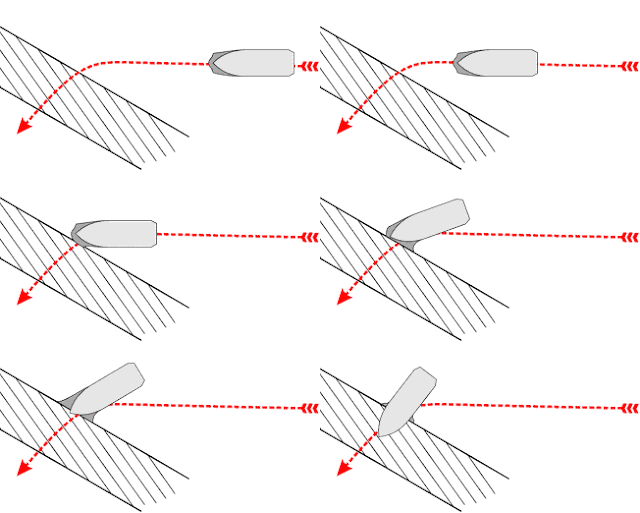
Another important phenomenon to understand is shell normalisation. There is a popular misconception that when a shell hits an inclined armor plate, it will turn by a few degrees before digging into the armor, thus reducing the acute angle it has to negotiate. Such that a 50 degree slope becomes a more manageable 45 degree slope, or some other such reduction. In fact, this is not what actually happens. Normalisation only occurs after the shell has dug into the armor, not before. So when a projectile hits an inclined armor plate, the net result is that it ends up making an S-shaped hole. The difference in the angle of the entrance and exit hole is what leads people to believe that 'normalisation' has taken place.
Manufacturing defects
The last factor we'll examine are manufacturing defects that occur at the mill where armor plates are heat treated and tempered at. These mechanical flaws in the structure of the armor will reduce its resistance to impacting projectiles, sometimes by a small amount, sometimes by a severe amount. There are a number of different factors that can lead to substandard armor plate being produced. Early in the war, the U.S. experienced problems with manufacturing defects. The Sherman tank made extensive use of cast armor, not only in the turret but in the hull as well. These armor castings frequently suffered from hot tears and shrinkage cracks. [3] RHA plates were not without problems either, and were sometimes found to be riddled with stringers and laminations. These problems stemmed mainly from the huge expansion of the U.S. tank industry, which went from producing over 300 tanks in 1940, to over 23,000 tanks in 1942. The sheer quantity of armor plate required meant a decline in quality control.
Later in the war, the Germans also had their fare share of trouble with manufacturing defects. By early 1944, they were suffering from a shortage of alloying elements like nickel, tungsten, molybdenum, and manganese. This forced them to reduce the quantitys of these critical alloys, or to find substitute alloys. In order to ensure that their armor plates did not suffer from brittleness or flaws, a different method of heat treatment also had to be utilised. The Germans eventually settled on the so-called interrupted quench process. [4] This required great precision in the tempering of the plate, and if the timing was not within a certain margin, the plate would be mechanically flawed. It was not always possible to detect armor with defects. The steel mills were unable to achieve consistent quality control, and were unintentionally churning out many flawed plates.
The Soviet Union experienced some notable problems with manufacturing defects, as well. These issues weren't as ubiquitous as those plaguing the Sherman tanks, but they still cropped up relatively often. The Americans noted their presence in a number of different metallurgical reports. Some of these difficultys can be linked to the fact that much of the USSRs industry had to be hastily evacuated to the Urals in 1941, in order to avoid being captured by the invading German army. The rest can be linked to the fact that Russia was technologically less advanced than the other great powers. Armor castings (especially on the KV-1 tank) tended to have issues with hot tears and shrinkage cracks. RHA plates were sometimes not adequately cross-rolled, and were incompletely quench hardened. [5] This resulted in uneven hardness levels in an armor plate, an undesirable feature. The high hardness armor of the T-34 was noted for its tendency to create spall.
Sources
[1] World War II Ballistics: Armor and Gunnery, by Robert D. Livingston. (Page 15 and 16)
[2] World War II Ballistics: Armor and Gunnery, by Robert D. Livingston. (Page 28)
[3] World War II Ballistics: Armor and Gunnery, by Robert D. Livingston. (Page 6 and 7)
[4] World War II Ballistics: Armor and Gunnery, by Robert D. Livingston. (Page 8 and 9)
[5] Metallurgical Examination of Armor and Weld Joint Samples from Russian Medium Tank T-34 and Heavy Tank KV-1. (Page 1 and 9)
This article will give a brief overview of the types of armor plate used on tanks during WW2, and examine some of the different ways it could fail when struck by an armor piercing shell. Different types of projectiles can cause the same plate to fail in different ways, so we'll also need to go into detail about that. Then we'll go over the importance of thickness/diameter ratios, how they influence the effect of armor sloping, and how shell normalisation actually works. Finally, we'll look at manufacturing defects that can compromise the quality of an armor plate. The field of armor and ballistics is complicated, but not so much that a basic understanding can't be gleaned.
Types of tank armor
Generally, there are two different types of armor that were used on tanks and AFVs during WW2. The first type of steel armor was heated until the point it was red hot, and was then forged into the required shape. This is rolled homogeneous armor. The second type of steel armor was heated until the point it melted, and was then poured into the required shape. This is cast armor. Both types of armor had to be heat treated and tempered until they gained the desired metallurgical propertys, such as tensile strength, hardness, etc. The alloying elements introduced into the steel -such as manganese, tungsten, nickel, chrome, vanadium- would influence its final form. Rolled homogeneous armor (RHA) had a uniform level of hardness throughout the plate, usually about 250-350 BHN, depending on how thick it is. Face hardened armor (FHA) had two different hardness levels in the plate: The surface was about 450-650 BHN, while the rest was about 250-350 BHN.
FHA is useful against projectiles with a diameter smaller than the plate thickness, I.E., an undermatching shell. It also has the ability to shatter uncapped projectiles and defeat them. However, FHA has the disadvantage that it is more prone to cracking, which gives it lower multi hit protection than RHA. Moreover, FHA plates offers inferior protection to an equivalent RHA plate when hit by capped shells. Another type of tank armor is the so called high-hardness armor. This is similar to FHA, except the hardening extends through the entire depth of the plate, and not just the surface of it. It has a uniformly high level of hardness throughout the plate. For the most part, only the Soviet Union used this type of armor during the war. It had the same strengths and weakness' as FHA did, but taken to the extreme. High hardness armor was only useful against undermatching or uncapped shells. Interestingly enough, cast armor could also be heat treated to achieve the same levels of hardness.
Modes of armor failure
What are some of the different ways that armor plate can fail? The first thing to keep in mind is the difference between penetration vs perforation. When a shell perforates, it passes completely through the armor plate and flys into the vehicle itself. When a shell merely penetrates, however, it does not pass through the plate: It produces a crater and knocks off pieces from the back side of the plate. This effect is known as scabbing or spalling. This is a less serious mode of failure.
In instances when a shell actually perforates the armor, you have to distinguish between ductile and brittle modes of failure. This is absolutely essential. Brittle failures are more dangerous than ductile failures. We'll detail some of the different categorys below. Please note, however, that the type of projectile which strikes an armor plate will strongly influence the manner in which it fails. A shell with an armor piercing cap will usually cause ductile failures in the plate, while uncapped shells will usually cause brittle failures in the plate.
-For ductile failures, there are three different categorys. Plugging, ductile hole growth, and petaling. Ductile hole growth is when the plate (at the impact site) is holed from front to back. Petaling is when the back of the plate folds out. Plugging is when the back of the plate is ejected into the vehicle, along with the projectile.
-For brittle failures, there are two different categorys: Brittle fractures, and brittle plugging. Brittle fractures is when the plate (at the impact site) is shattered from front to back. Brittle plugging is when the back of the plate is shattered and ejected into the vehicle, along with the projectile.
Note: With ductile types of plugging, the shell is still intact and exhibits little or no change of shape. With brittle plugging, the shell is not intact and exhibits a major change of shape. The size of the plugs knocked off the backside of the armor are also larger.

Modes of armor failure
Types of armor piercing shells
There are a few different types of projectile designs, which have different advantages and disadvantages. There is the standard armor piercing (AP) shell. And the armor piercing capped (APC) shell. This is an AP projectile fitted with a cap that prevents it from shattering. There is also armor piercing ballistic capped (APBC). This is an AP shell fitted with an aerodynamic windscreen to improve its ballistic coefficient, but does not prevent it from shattering. Then there is an AP shell fitted with both types of caps (APCBC). This not only enhances its ballistic coefficient but also prevents it from shattering.
Note that most of these designs have a tiny cavity at their base, which is filled with explosive. This works to burst the shell behind the armor plate, increasing the damage it does. The other type of shell is armor piercing high explosive (APHE). This is a regular AP shell, but with a larger explosive filling. Then there is armor piercing composite rigid (APCR). These types of projectiles have a dense tungsten core and an aluminum body. They have excellent penetration, but poor aerodynamics.
As a general rule, projectiles without an armor piercing cap tend to defeat armor through brittle fractures and brittle plugging. When they do succeed in punching through an armor plate, they leave jagged holes wider than the caliber of the shell. Projectiles with an armor piercing cap tend to defeat armor through ductile hole growth, petaling, or plugging. When they punch through an armor plate, they leave neat holes that are the same width as the shells caliber. Keep in mind that these distinctions are not absolute, and there are instances when capped and uncapped shells can defeat armor in different ways than this.
Its also important to note that the nose shape of the projectile can also have an influence on how it interacts with the target plate. Blunt nosed projectiles have an increased tendency towards plugging (of both the brittle and ductile variety). Sharp nosed projectiles have an increased tendency towards petaling and ductile hole growth. [1] The difference in nose shape also influences their effect on unsloped vs sloped armor. Blunt nosed projectiles are superior against sloped armor plates, whereas sharp nosed projectiles are superior against unsloped armor plates.

Types of armor piercing shells
T/D ratio and sloping
Failure mechanisms for armor are largely dictated by the T/D ratio, where T is the armor thickness and D is projectile diameter. (Simply divide the former by the latter) The T/D ratio dictates that the more the thickness of the armor plate exceeds the diameter of the projectile, the harder it is for the incoming shell to achieve a penetration. The converse is also true of course, and the more the diameter of the projectile exceeds the thickness of the plate, the easier it is for the shell to achieve penetration. To put it simply, larger shells have an advantage over relatively thinner plates. Whats more interesting is that T/D ratio can also determine whether or not the degree of sloping in an armor plate is effective or not.
One way to demonstrate this is by looking at the hull front of a Sherman tank. Early models had a 51mm thick glacis sloped at 56 degrees, for an LOS thickness of 91mm. Later models had a 63mm thick glacis sloped at 47 degrees, for an LOS thickness of 92mm. Even though there was practically no difference in either plates line of sight (LOS) thickness, the later model of Sherman actually offered superior resistance. Because of the more favorable T/D ratio, they had a higher chance of withstanding hits from 75mm APCBC projectiles. The 51mm thick glacis was equal to 98mm of RHA, while the 63mm thick glacis was equal to 118mm of RHA. (Assuming there were no flaws in the armor itself) [2]
Another important phenomenon to understand is shell normalisation. There is a popular misconception that when a shell hits an inclined armor plate, it will turn by a few degrees before digging into the armor, thus reducing the acute angle it has to negotiate. Such that a 50 degree slope becomes a more manageable 45 degree slope, or some other such reduction. In fact, this is not what actually happens. Normalisation only occurs after the shell has dug into the armor, not before. So when a projectile hits an inclined armor plate, the net result is that it ends up making an S-shaped hole. The difference in the angle of the entrance and exit hole is what leads people to believe that 'normalisation' has taken place.

This is not how normalisation works!
Manufacturing defects
The last factor we'll examine are manufacturing defects that occur at the mill where armor plates are heat treated and tempered at. These mechanical flaws in the structure of the armor will reduce its resistance to impacting projectiles, sometimes by a small amount, sometimes by a severe amount. There are a number of different factors that can lead to substandard armor plate being produced. Early in the war, the U.S. experienced problems with manufacturing defects. The Sherman tank made extensive use of cast armor, not only in the turret but in the hull as well. These armor castings frequently suffered from hot tears and shrinkage cracks. [3] RHA plates were not without problems either, and were sometimes found to be riddled with stringers and laminations. These problems stemmed mainly from the huge expansion of the U.S. tank industry, which went from producing over 300 tanks in 1940, to over 23,000 tanks in 1942. The sheer quantity of armor plate required meant a decline in quality control.
Later in the war, the Germans also had their fare share of trouble with manufacturing defects. By early 1944, they were suffering from a shortage of alloying elements like nickel, tungsten, molybdenum, and manganese. This forced them to reduce the quantitys of these critical alloys, or to find substitute alloys. In order to ensure that their armor plates did not suffer from brittleness or flaws, a different method of heat treatment also had to be utilised. The Germans eventually settled on the so-called interrupted quench process. [4] This required great precision in the tempering of the plate, and if the timing was not within a certain margin, the plate would be mechanically flawed. It was not always possible to detect armor with defects. The steel mills were unable to achieve consistent quality control, and were unintentionally churning out many flawed plates.
The Soviet Union experienced some notable problems with manufacturing defects, as well. These issues weren't as ubiquitous as those plaguing the Sherman tanks, but they still cropped up relatively often. The Americans noted their presence in a number of different metallurgical reports. Some of these difficultys can be linked to the fact that much of the USSRs industry had to be hastily evacuated to the Urals in 1941, in order to avoid being captured by the invading German army. The rest can be linked to the fact that Russia was technologically less advanced than the other great powers. Armor castings (especially on the KV-1 tank) tended to have issues with hot tears and shrinkage cracks. RHA plates were sometimes not adequately cross-rolled, and were incompletely quench hardened. [5] This resulted in uneven hardness levels in an armor plate, an undesirable feature. The high hardness armor of the T-34 was noted for its tendency to create spall.
Sources
[1] World War II Ballistics: Armor and Gunnery, by Robert D. Livingston. (Page 15 and 16)
[2] World War II Ballistics: Armor and Gunnery, by Robert D. Livingston. (Page 28)
[3] World War II Ballistics: Armor and Gunnery, by Robert D. Livingston. (Page 6 and 7)
[4] World War II Ballistics: Armor and Gunnery, by Robert D. Livingston. (Page 8 and 9)
[5] Metallurgical Examination of Armor and Weld Joint Samples from Russian Medium Tank T-34 and Heavy Tank KV-1. (Page 1 and 9)
Saturday, 15 December 2018
TankArchives: 85mm gun vs Tiger I
Introduction
This article will examine the Soviet tests on the Tiger I tank. Or more specifically, how it was portrayed by a spin doctor named TankArchives. This notorious individual has made a career out of interpreting Soviet military reports and memorandums dating from World War 2. He has a long track record of distorting evidence and making dishonest claims, as part of an agenda to change public perception of the Nazi-Soviet war. As per his blog name, he fancys himself as an expert on all things related to armored vehicles. TankArchives also has a major problem with objectivity. When translating these wartime reports, he just can't help but insert his own dialogue into the middle, drawing his own facile conclusions about what was going on. This habit becomes most jarring whenever he translates Soviet reports on German vehicles. TankArchives never hesitates to use this as an opportunity to 'bash' them for 'design flaws.' His antics were the subject of a thorough rebuttal a few months back.
In that instance, he was making biased, incorrect, and subjective interpretations about the kubinka test on the Tiger II. He tried to mislead his audience into thinking the tanks armor was suffering catastrophic failures, when in fact this was simply not the case. TankArchives omitted to show the photographs that depicted what was really going on. He also grossly exaggerated the effects of the hits and marginalised German armor quality. This article is no exception. As before, we'll look at the exact same report as TankArchives and examine whether or not his claims misrepresent it. The format of this article will be somewhat different from the last rebuttal. Previously, we focused solely on the results of the 122mm test, mainly because it was the first weapon used. That approach wouldn't work here, though, because the 85mm was one of the last weapons tested. Therefore, we'll have to do an overview of the other guns that were fired in the trials. This is actually a crucial piece of context that undermines some of TankArchives conclusions about the Tiger I.

The firing tests, part one
In this part of the trials, the Soviets fire three different weapons against the Tiger tank. The 45mm L46 and 45mm L66 gun guns were tested against the sides, while the 57mm L73 gun was tested against the side turret and front hull. Although the side armor was pierced numerous times, it did not crack at any point. There were no penetrations of the front armor.
45mm L46 gun: Five shots were fired against the side of the turret, from a range of 200 to 500 meters. Two of them penetrated.
45mm L66 gun: Nine shots were fired against the side of the turret and side of the hull, from a range of 100 to 500 meters. Six of them penetrated.
57mm L73 gun: A total of ten shots were fired against the side and front of the hull. Three of them managed to penetrate. We'll examine these in more detail.
-Shot #1 was fired from 800 meters against the hull side: It penetrated.
-Shot #2 was fired from 1000 meters against the cupola: It penetrated.
-Shot #3 and #4 were fired from 1000 meters against the hull side: One shell penetrated, and one shell left a dent.
-Shot # 5, #6, and #7 were fired from 1450 meters against the turret side. None of the shells penetrated, and instead left only dents.
-Shots #8, #9, and #10 were fired from 500 meters against the hull front. None of the shells penetrated, and instead left only dents. A weld seam is also burst.

The firing tests, part two
In this part of the trials, the Soviets fire three different weapons against the Tiger tank, including a British and American gun. The 57mm Mk IV and 75mm M3 gun were tested against the sides, while the 76mm L42 gun was tested against the side turret and the front hull. Although the side armor was pierced numerous times, it did not crack at any point. There were no penetrations of the front armor.
57mm Mk IV gun: Six shots were fired against the side of the turret and side of the hull, from a range of 625 to 1000 meters. Three of the shots penetrated.
75mm M3 gun: Seven shots were fired against the side of the turret and side of the hull, from a range of 400 to 650 meters. Five of the shots penetrated.
76mm L42 gun: A total of eleven shots were fired against the side and front of the hull. Regular AP shells were used, in addition to HVAP shells. Astonishingly, none of them managed to penetrate (!). We'll examine these in more detail.
-Shot #1 and #2 were fired from 650 and 400 meters against the hull side and turret side. Both failed to penetrate.
-Shots #3 and #4 were fired from 200 and 500 meters against the turret side and hull side. Both failed to penetrate.
-Shots #5, #6, and #7 were fired from 500 meters against the hull front. All three failed to penetrate, and left only dents.
-Shots #8 and #9 were fired from 300 and 200 meters against the hull front. Both failed to penetrate.
-Shots #10 and #11 were fired from 400 and 200 meters against the hull side. Both failed to penetrate.

The firing tests, part 3
In this part of the trials, the Soviets fire two different weapons against the Tiger tank. The 75mm L55 gun, and the 85mm L55 gun. We've finally gotten to the main event, the entire point of this article. The Tiger I has been quite badly shot up by this point, but has held up quite well to the abuse. This part of the test is when the frontal armor is finally penetrated.
76mm L55 gun: Six shots were fired against the side of the turret and side of the hull, from a range of 500 to 1450 meters. Only one of the shots penetrated.
85mm L55 gun: This is the more interesting part of the trials. A total of six shots were fired at the side of the turret and front of the hull.
-Shot #1 was fired from 800 meters against the turret side: It penetrated.
-Shot #2 and #3 were fired from 1450 meters against the turret side: It penetrated.
-Shot #4 was fired from 1000 meters against the lower front plate: It penetrated.
-Shot #5 was fired from 1500 meters against the upper front plate: It left a large dent, but did not penetrate.
-Shot #6 was fired from 1500 meters against the lower front plate: It hit next to the previous shot and broke a piece of armor loose.


Conclusions about the firing test
So, what can kindof conclusions we take away from the tests? Well to be frank, the methodology of the Soviets is bizarre. They used eight different weapons and fired a total of 60 shots at the Tiger I. * They even used guns from Britain and America, in a test of questionable relevance. They also showed a myopic focus on the side armor. They only tested three weapons against the frontal armor, and two of them (the 76mm guns) proved completely helpless. And yet, that didn't seem to alarm the Soviets at all.
Rather than extensively test their most powerful weapon against this formidable tank, they were content to only fire three shots at the Tigers front! It makes no sense. They didn't even test the armor of the turret face! They merely fired at the upper and lower front plate. One can't help but get the feeling that they had tunnel vision. The Soviets didn't even bother to fire a second shot at the UFP, after the first shot failed. They did that for the LFP, but not the UFP! The entire trial was marked by a lack of curiosity bordering on negligence.
The true effectiveness of the 85mm S53 gun is hard to determine. These tests show that it could penetrate the Tiger Is glacis from 1000 meters. However, subsequent tests showed that it was unable to penetrate the turret face from 400 meters. [1] While the gun was nearly as powerful as the vaunted 88mm L56, it had serious problems with ammunition quality. Wartime Soviet shells did not use armor piercing caps to soften the forces of impact on themselves. The projectiles also had a brittle and soft nose which gave them a bad tendency to shatter against armor at close range. [2] As a result, they had a rather narrow envelope from which they could effectively penetrate.
The cracking of the Tigers LFP is an interesting effect. One of the weld seams had already been burst during the 57mm test. And once the 85mm was fired at it, this was the last straw that broke the plate. The location of the hit was likely a factor, too. Shot #6 not only landed next to shot #4, but it also hit near the edge of the plate. The vulnerability of the LFP became clear in previous tests with the 57mm gun, when the it was suffering greater damage than the UFP. This plate was a definite weakpoint, and was regarded as such by the Germans themselves. Thats why crews would insert pieces of track on top of it, in order to provide extra protection.
TankArchives interpretation
In the previous article, it was noted that TankArchives has a poor grasp of metallurgy and ballistics. He looks upon any instance of brittle behavior in the armor plate and chalks it up to nothing more than low quality. He didn't understand that the kind of ammunition being used will influence how the armor reacts. British, American, and German weapons all used capped shells which defeat armor through ductile hole growth. Soviet weapons used uncapped shells which can only defeat armor through brittle fractures. TankArchives has consistently ignored how differently the test vehicles will perform when fired at by different types of ammunition! **
He trys to frame the 85mm gun as the achilles heel of the Tiger I, just as he framed the 122mm gun as the bane of the Tiger II. But the quality of these two tests are diametrically opposed. One of them is thorough and rigorous, while the other is not. In the 122mm test, there were a total of eleven shots against the front armor: Seven against the glacis, and four against the turret. In the 85mm test, there were a total of three shots against the front armor: Three against the hull, and none against the turret. Its hard to draw many conclusions from this, especially when the results conflict with other tests. [1]
Another thing that must be mentioned is the dishonest manner in which TankArchives presents these tests. At no point in his article does he tell the audience that the Tiger had already been shot at dozens of times by a bunch of different weapons, and had held up to the punishment remarkably well. In fact, its much worse than this: He actually hides the results of some of the trials! He wrote at least five articles covering the tests on the Tiger I, and not one of those articles mention the tests involving the 76mm L42 or 76mm L55 gun. Thats his dirty little secret. The main weapon used on the T-34\76 tank, and the main field gun of the Red Army, was completely useless against the front armor of this tank.
This is a shocking omission that really throws his objectivity into question. When covering these ballistics tests, he only reported on the guns that managed to successfully pierce the tanks armor. In trials where the gun failed to make a significant impression, he simply refused to report on them at all! TankArchives is clearly a biased author who has an agenda of making German tanks look as bad as possible, while making Soviet weapons look better than they really were. His work is marred by dishonesty, exaggeration, and outright lies.
Notes
*And thats not counting the huge 122mm L46 gun used at the very end of the test!
**In the Tiger II tests, the tanks armor stopped acting brittle when it was fired upon by German 75mm and 88mm guns. In the Tiger I tests, the tanks armor stopped acting brittle when it was fired upon by the British 57mm and American 75mm guns. What an astonishing coincidence!
Sources
[1] Demolishing the Myth: The Tank Battle at Prokhorovka, Kursk, by Valeriy Zamulin. (Page 433)
[2] World War II Ballistics: Armor and Gunnery, by Robert D. Livingston. (Page 11)
This article will examine the Soviet tests on the Tiger I tank. Or more specifically, how it was portrayed by a spin doctor named TankArchives. This notorious individual has made a career out of interpreting Soviet military reports and memorandums dating from World War 2. He has a long track record of distorting evidence and making dishonest claims, as part of an agenda to change public perception of the Nazi-Soviet war. As per his blog name, he fancys himself as an expert on all things related to armored vehicles. TankArchives also has a major problem with objectivity. When translating these wartime reports, he just can't help but insert his own dialogue into the middle, drawing his own facile conclusions about what was going on. This habit becomes most jarring whenever he translates Soviet reports on German vehicles. TankArchives never hesitates to use this as an opportunity to 'bash' them for 'design flaws.' His antics were the subject of a thorough rebuttal a few months back.
In that instance, he was making biased, incorrect, and subjective interpretations about the kubinka test on the Tiger II. He tried to mislead his audience into thinking the tanks armor was suffering catastrophic failures, when in fact this was simply not the case. TankArchives omitted to show the photographs that depicted what was really going on. He also grossly exaggerated the effects of the hits and marginalised German armor quality. This article is no exception. As before, we'll look at the exact same report as TankArchives and examine whether or not his claims misrepresent it. The format of this article will be somewhat different from the last rebuttal. Previously, we focused solely on the results of the 122mm test, mainly because it was the first weapon used. That approach wouldn't work here, though, because the 85mm was one of the last weapons tested. Therefore, we'll have to do an overview of the other guns that were fired in the trials. This is actually a crucial piece of context that undermines some of TankArchives conclusions about the Tiger I.

The Tiger I after being fired at by the
85mm S-53 and 122mm A-19 gun
The firing tests, part one
In this part of the trials, the Soviets fire three different weapons against the Tiger tank. The 45mm L46 and 45mm L66 gun guns were tested against the sides, while the 57mm L73 gun was tested against the side turret and front hull. Although the side armor was pierced numerous times, it did not crack at any point. There were no penetrations of the front armor.
45mm L46 gun: Five shots were fired against the side of the turret, from a range of 200 to 500 meters. Two of them penetrated.
45mm L66 gun: Nine shots were fired against the side of the turret and side of the hull, from a range of 100 to 500 meters. Six of them penetrated.
57mm L73 gun: A total of ten shots were fired against the side and front of the hull. Three of them managed to penetrate. We'll examine these in more detail.
-Shot #1 was fired from 800 meters against the hull side: It penetrated.
-Shot #2 was fired from 1000 meters against the cupola: It penetrated.
-Shot #3 and #4 were fired from 1000 meters against the hull side: One shell penetrated, and one shell left a dent.
-Shot # 5, #6, and #7 were fired from 1450 meters against the turret side. None of the shells penetrated, and instead left only dents.
-Shots #8, #9, and #10 were fired from 500 meters against the hull front. None of the shells penetrated, and instead left only dents. A weld seam is also burst.

57mm AP to upper front plate
The firing tests, part two
In this part of the trials, the Soviets fire three different weapons against the Tiger tank, including a British and American gun. The 57mm Mk IV and 75mm M3 gun were tested against the sides, while the 76mm L42 gun was tested against the side turret and the front hull. Although the side armor was pierced numerous times, it did not crack at any point. There were no penetrations of the front armor.
57mm Mk IV gun: Six shots were fired against the side of the turret and side of the hull, from a range of 625 to 1000 meters. Three of the shots penetrated.
75mm M3 gun: Seven shots were fired against the side of the turret and side of the hull, from a range of 400 to 650 meters. Five of the shots penetrated.
76mm L42 gun: A total of eleven shots were fired against the side and front of the hull. Regular AP shells were used, in addition to HVAP shells. Astonishingly, none of them managed to penetrate (!). We'll examine these in more detail.
-Shot #1 and #2 were fired from 650 and 400 meters against the hull side and turret side. Both failed to penetrate.
-Shots #3 and #4 were fired from 200 and 500 meters against the turret side and hull side. Both failed to penetrate.
-Shots #5, #6, and #7 were fired from 500 meters against the hull front. All three failed to penetrate, and left only dents.
-Shots #8 and #9 were fired from 300 and 200 meters against the hull front. Both failed to penetrate.
-Shots #10 and #11 were fired from 400 and 200 meters against the hull side. Both failed to penetrate.

76mm HVAP to upper front plate
The firing tests, part 3
In this part of the trials, the Soviets fire two different weapons against the Tiger tank. The 75mm L55 gun, and the 85mm L55 gun. We've finally gotten to the main event, the entire point of this article. The Tiger I has been quite badly shot up by this point, but has held up quite well to the abuse. This part of the test is when the frontal armor is finally penetrated.
76mm L55 gun: Six shots were fired against the side of the turret and side of the hull, from a range of 500 to 1450 meters. Only one of the shots penetrated.
85mm L55 gun: This is the more interesting part of the trials. A total of six shots were fired at the side of the turret and front of the hull.
-Shot #1 was fired from 800 meters against the turret side: It penetrated.
-Shot #2 and #3 were fired from 1450 meters against the turret side: It penetrated.
-Shot #4 was fired from 1000 meters against the lower front plate: It penetrated.
-Shot #5 was fired from 1500 meters against the upper front plate: It left a large dent, but did not penetrate.
-Shot #6 was fired from 1500 meters against the lower front plate: It hit next to the previous shot and broke a piece of armor loose.
85mm AP to lower front plate
85mm AP to upper front plate
85mm AP to lower front plate
Conclusions about the firing test
So, what can kindof conclusions we take away from the tests? Well to be frank, the methodology of the Soviets is bizarre. They used eight different weapons and fired a total of 60 shots at the Tiger I. * They even used guns from Britain and America, in a test of questionable relevance. They also showed a myopic focus on the side armor. They only tested three weapons against the frontal armor, and two of them (the 76mm guns) proved completely helpless. And yet, that didn't seem to alarm the Soviets at all.
Rather than extensively test their most powerful weapon against this formidable tank, they were content to only fire three shots at the Tigers front! It makes no sense. They didn't even test the armor of the turret face! They merely fired at the upper and lower front plate. One can't help but get the feeling that they had tunnel vision. The Soviets didn't even bother to fire a second shot at the UFP, after the first shot failed. They did that for the LFP, but not the UFP! The entire trial was marked by a lack of curiosity bordering on negligence.
The true effectiveness of the 85mm S53 gun is hard to determine. These tests show that it could penetrate the Tiger Is glacis from 1000 meters. However, subsequent tests showed that it was unable to penetrate the turret face from 400 meters. [1] While the gun was nearly as powerful as the vaunted 88mm L56, it had serious problems with ammunition quality. Wartime Soviet shells did not use armor piercing caps to soften the forces of impact on themselves. The projectiles also had a brittle and soft nose which gave them a bad tendency to shatter against armor at close range. [2] As a result, they had a rather narrow envelope from which they could effectively penetrate.
The cracking of the Tigers LFP is an interesting effect. One of the weld seams had already been burst during the 57mm test. And once the 85mm was fired at it, this was the last straw that broke the plate. The location of the hit was likely a factor, too. Shot #6 not only landed next to shot #4, but it also hit near the edge of the plate. The vulnerability of the LFP became clear in previous tests with the 57mm gun, when the it was suffering greater damage than the UFP. This plate was a definite weakpoint, and was regarded as such by the Germans themselves. Thats why crews would insert pieces of track on top of it, in order to provide extra protection.
TankArchives interpretation
In the previous article, it was noted that TankArchives has a poor grasp of metallurgy and ballistics. He looks upon any instance of brittle behavior in the armor plate and chalks it up to nothing more than low quality. He didn't understand that the kind of ammunition being used will influence how the armor reacts. British, American, and German weapons all used capped shells which defeat armor through ductile hole growth. Soviet weapons used uncapped shells which can only defeat armor through brittle fractures. TankArchives has consistently ignored how differently the test vehicles will perform when fired at by different types of ammunition! **
He trys to frame the 85mm gun as the achilles heel of the Tiger I, just as he framed the 122mm gun as the bane of the Tiger II. But the quality of these two tests are diametrically opposed. One of them is thorough and rigorous, while the other is not. In the 122mm test, there were a total of eleven shots against the front armor: Seven against the glacis, and four against the turret. In the 85mm test, there were a total of three shots against the front armor: Three against the hull, and none against the turret. Its hard to draw many conclusions from this, especially when the results conflict with other tests. [1]
Another thing that must be mentioned is the dishonest manner in which TankArchives presents these tests. At no point in his article does he tell the audience that the Tiger had already been shot at dozens of times by a bunch of different weapons, and had held up to the punishment remarkably well. In fact, its much worse than this: He actually hides the results of some of the trials! He wrote at least five articles covering the tests on the Tiger I, and not one of those articles mention the tests involving the 76mm L42 or 76mm L55 gun. Thats his dirty little secret. The main weapon used on the T-34\76 tank, and the main field gun of the Red Army, was completely useless against the front armor of this tank.
This is a shocking omission that really throws his objectivity into question. When covering these ballistics tests, he only reported on the guns that managed to successfully pierce the tanks armor. In trials where the gun failed to make a significant impression, he simply refused to report on them at all! TankArchives is clearly a biased author who has an agenda of making German tanks look as bad as possible, while making Soviet weapons look better than they really were. His work is marred by dishonesty, exaggeration, and outright lies.
Notes
*And thats not counting the huge 122mm L46 gun used at the very end of the test!
**In the Tiger II tests, the tanks armor stopped acting brittle when it was fired upon by German 75mm and 88mm guns. In the Tiger I tests, the tanks armor stopped acting brittle when it was fired upon by the British 57mm and American 75mm guns. What an astonishing coincidence!
Sources
[1] Demolishing the Myth: The Tank Battle at Prokhorovka, Kursk, by Valeriy Zamulin. (Page 433)
[2] World War II Ballistics: Armor and Gunnery, by Robert D. Livingston. (Page 11)
Sunday, 11 November 2018
No glory in war: the end of WW1
Today marks the 100th year anniversary of the end of world war 1. It was a conflict that did not end in victory for any one nation, but defeat for all. Every country that participated lost more than they gained. Men were sent to war on a lie, giving everything they had in the belief that it was the right thing to do. After the stalemate dragged on for years and became intolerable, backroom deals were worked out to undermine the central powers and force them to surrender. It brought the bloodshed to an end, but only in a way that left everyone worse off than they had before. This indecisive and unsatisfactory end would lay the seeds for another terrible war.
What should we really remember about armistice day?
What should we really remember about armistice day?
Wednesday, 31 October 2018
RE: The 5 Shermans = 1 Panther “myth”
This is yet another response to the war of tanks themed blog, For The Record. The site has a bad habit of posting misleading articles which are full of faulty conclusions. This article is no exception. It attempts to discredit the notion that German tanks such as the Tiger or Panther could achieve significantly higher kill ratios against American tanks like the Sherman. The author in question (Priory of Sion) asserts that technical characteristics and crew training were, in fact, not the determining factor in this. He argues that whichever side spotted the enemy first was the one that held the upper hand, and would obtain the higher kill ratio. Since the attackers had to expose themselves, they were usually spotted by the defenders first. There is certainly some truth to this argument, but he makes the error of assuming that this was the most important factor of all in a tank vs tank engagement. Priory of Sion seems to believe that the Panther tank had some deficiency in fire control that made it inferior to the Sherman. He comes to this conclusion by relying on a single questionable source: The infamous BRL memorandum No. 798. As we shall see, these mistakes will serve to largely invalidate his article.

Origins of the legend
The post starts out with an examination of the notorious dictum that it took four or five Shermans to defeat one Tiger (or Panther) tank. To be sure, the 'Tiger legend' can be found in the memoirs of many WW2 veterans. The tank had a fearsome reputation all out of proportion to the small numbers that were produced. It gave Allied tankers an inferiority complex about their Shermans, and led to many instances of tank terror among the infantry. Many soldiers eventually came to the conclusion that the only way the lumbering beasts could be defeated was to send an entire platoon after just one tank. The TV show, Greatest Military Clashs, even did an episode on the Tiger myth. Annoyed with all the undeserved praise being heaped on the German 'cats', Priory of Sion decides to track down the origin of the 'five vs one' rumor. His investigation (which probably involved no more than a 5 minute google search) leads him to conclude that the legend originated with Belton Cooper. A veteran of the 3rd armored division, who authored the 1998 book called Death Traps. This memoir is particularly hated by teaboos and freeaboos, due to its unflattering depiction of the Sherman tank. Priory of Sion (who we'll call POS for now) throws the blame for the 'five vs one' legend squarely at the feet of Belton Cooper, and asserts that it is a dictum with little supporting evidence.
In fact, a closer look at the historical records show that the Panther\Tiger myth pre-dates Coopers book by several decades. Even if we assume that it didn't actually originate in the Second World War itself, it must have arisen very soon after. More importantly, the legend was echoed by authors with higher academic standing than old man Cooper. In Janusz Piekalkiewicz' 1986 book, he states: "According to U.S. Army statistics, it cost five Shermans or some nine T-34s to destroy one Panther." [1] That pushs back the date established by POS by 12 years. In his 1975 book, Bruce Culver claims: ''An unofficial rule of thumb in the U.S. Army was that it took five Shermans to knock out a single Panther.'' [2] That pushs back the date by 23 years. But the real nail in the coffin is when you read the memoirs of Henry Giles, who firmly states that: “It took four of our Shermans to equal one of their Panthers and about eight to equal one of their Tigers.” [3] His book was published in 1965. Thats a full 33 years before Death Traps hit the book shelves. When taking that all into consideration, its becomes clear just how far off the mark POS and his conclusions are. The five to one legend wasn't something that Belton Cooper just pulled out of his ass sometime in the 90s: It was already a well established myth by that point.
Overclaiming by the 3rd and 4th armored
In order to disprove the notion that the Panther was superior to the Sherman, Priory of Sion proceeds to bring out his trump card: BRL memorandum No. 798. The sacred document held in reverence by all freeaboos and teaboos. This report summarises numerous tank engagements on the western front during the 1944 period. To come to their conclusions, the BRL used after-action reports from the 3rd and 4th armored divisions. These were the most successful formations in the U.S. army, and were not really representative of the army as a whole. The 3rd AD entered into combat on July 9, while the 4th AD entered into combat on July 17. When the war was finished, and they turned in their unit diaries, researchers were startled at what they read. The 4th armored claimed to have made 847 tank kills, while the 3rd armored claimed to have made 1023 tank kills! That is a combined total of 1870 kills, a really incredible number that stretchs credibility to the utmost. Because the BRL memorandum is based on these kill claims, it is important to explore whether or not they are realistic. BRL memo no. 798 covers a period of August to December 1944. In the interest of fairness, we should assume that the 3rd and 4th armored scored only half their kills during this time frame.
But even with this generous assumption, the American claims still don't add up with the losses actually recorded by the Germans. They wrote off a total of 4973 AFVs on all fronts, a number that includes 2861 tanks. [4] Those are the losses that were sustained by dozens of panzer and panzergrenadier divisions that were fighting in four different theaters: The eastern front, the western front, the Italian front, and the Balkan front. If the BRL memorandum is correct, then it means that fully 18.8% of their AFV losses in that period (935 tanks) were from these two armored divisions! Thats completely absurd. And just to put things into even starker contrast, consider this. Many of the 4th armored divisions claims were made during the battle of Arracourt. They reported the destruction of at least 285 German tanks and SPGs during the battle. [5] But there is a glaring error with this claim... And that is because the Germans didn't even deploy that many tanks during the battle! They only fielded 262 tanks and SPGs at Arracourt, and of that number, only 86 of them were destroyed beyond repair (I.E., write offs). [6] This shows how idiotic it is to make conclusions based solely on unit diarys. Without further verification, they are completely unreliable and misleading. It is now clear that the U.S. army routinely overclaimed the number of tanks they destroyed.

Unverified claims by the BRL
Out of the 86 tank engagements recorded by the two armored divisions from August to December, there were 30 encounters between the Sherman and the Panther. In these battles, the Americans lost 21 tanks, while the Germans lost 72 tanks. Thats a loss exchange ratio of 3.4 to 1. The Shermans were on the defense in 20 of these encounters, while the Panthers were on the defense in 10 encounters. There were also 14 engagements between tank destroyers (TDs) and Panthers. In these battles, the Americans lost 3 tank destroyers, while the Germans lost 26 tanks. These facts by themselves should tell us that something is wrong. In the month of September alone, the 4th armored divisions lost 41 Sherman tanks and more than a dozen tank destroyers. [6] Many of these losses came during the battle of Arracourt, when they faced off against waves of unsupported Panthers. This allows us to make a simple conclusion: The BRL was not recording every single engagement that the two divisions participated in. They pre-selected engagements for their study and cherry picked their data. This observation becomes hard to deny once you understand that they studied a total of 86 engagements, in which only 158 enemy weapons (including 105 Panthers) were claimed as killed. In that same period, however, the 3rd and 4th armored divisions probably made half of their 1870 kill claims.
The BRL was using a form of statistical misrepresentation, because they screened out some of the battles these formations participated in. They only looked at those encounters for which there was firm and reliable data. A valid excuse, perhaps, but one that skews the results. The end result is that it paints the U.S. army in a better light, making them look like some real monsters. So when we examine the table for memorandum no. 798, we have to realise that this is not what the typical outcome of a battle was. It doesn't even make sense that the American tanks could have such a massive advantage simply by being on the defensive. POS seems to rationalise this as a result of the Sherman having far better optics than the Panther, but when you look at the respective telescopes, its obvious that this can't be the case. So how do we explain such an absurd disparity in effectiveness between the vehicles? Simply put, we can't. The only sane conclusion to make is that the 3rd and 4th armored divisions were exaggerating their kill claims, and the BRL was cherry picking what battles they studied. For this reason, the memorandum no. 798s claim that the Sherman was x times more effective than the Panther can be dismissed as uncorroborated nonsense.
Sources
[1] Tank War 1939-1945, by Janusz Piekalkiewicz. (Page 254)
[2] Panther in Action, by Bruce Culver. (Page 4)
[3] The G.I. Journal of Sergeant Giles, by Henry Giles.
[4] Armored Champion: The Top Tanks of World War II, by Steven Zaloga. (Page 223)
[5] The Lorraine Campaign: An Overview, September-December 1944, by Dr. Christopher R. Gabel. (Page 17)
[6] Armored Thunderbolt: The U.S. Army Sherman in World War II, by Steven Zaloga. (Page 192)

The classic David vs Goliath battle
Origins of the legend
The post starts out with an examination of the notorious dictum that it took four or five Shermans to defeat one Tiger (or Panther) tank. To be sure, the 'Tiger legend' can be found in the memoirs of many WW2 veterans. The tank had a fearsome reputation all out of proportion to the small numbers that were produced. It gave Allied tankers an inferiority complex about their Shermans, and led to many instances of tank terror among the infantry. Many soldiers eventually came to the conclusion that the only way the lumbering beasts could be defeated was to send an entire platoon after just one tank. The TV show, Greatest Military Clashs, even did an episode on the Tiger myth. Annoyed with all the undeserved praise being heaped on the German 'cats', Priory of Sion decides to track down the origin of the 'five vs one' rumor. His investigation (which probably involved no more than a 5 minute google search) leads him to conclude that the legend originated with Belton Cooper. A veteran of the 3rd armored division, who authored the 1998 book called Death Traps. This memoir is particularly hated by teaboos and freeaboos, due to its unflattering depiction of the Sherman tank. Priory of Sion (who we'll call POS for now) throws the blame for the 'five vs one' legend squarely at the feet of Belton Cooper, and asserts that it is a dictum with little supporting evidence.
In fact, a closer look at the historical records show that the Panther\Tiger myth pre-dates Coopers book by several decades. Even if we assume that it didn't actually originate in the Second World War itself, it must have arisen very soon after. More importantly, the legend was echoed by authors with higher academic standing than old man Cooper. In Janusz Piekalkiewicz' 1986 book, he states: "According to U.S. Army statistics, it cost five Shermans or some nine T-34s to destroy one Panther." [1] That pushs back the date established by POS by 12 years. In his 1975 book, Bruce Culver claims: ''An unofficial rule of thumb in the U.S. Army was that it took five Shermans to knock out a single Panther.'' [2] That pushs back the date by 23 years. But the real nail in the coffin is when you read the memoirs of Henry Giles, who firmly states that: “It took four of our Shermans to equal one of their Panthers and about eight to equal one of their Tigers.” [3] His book was published in 1965. Thats a full 33 years before Death Traps hit the book shelves. When taking that all into consideration, its becomes clear just how far off the mark POS and his conclusions are. The five to one legend wasn't something that Belton Cooper just pulled out of his ass sometime in the 90s: It was already a well established myth by that point.
Overclaiming by the 3rd and 4th armored
In order to disprove the notion that the Panther was superior to the Sherman, Priory of Sion proceeds to bring out his trump card: BRL memorandum No. 798. The sacred document held in reverence by all freeaboos and teaboos. This report summarises numerous tank engagements on the western front during the 1944 period. To come to their conclusions, the BRL used after-action reports from the 3rd and 4th armored divisions. These were the most successful formations in the U.S. army, and were not really representative of the army as a whole. The 3rd AD entered into combat on July 9, while the 4th AD entered into combat on July 17. When the war was finished, and they turned in their unit diaries, researchers were startled at what they read. The 4th armored claimed to have made 847 tank kills, while the 3rd armored claimed to have made 1023 tank kills! That is a combined total of 1870 kills, a really incredible number that stretchs credibility to the utmost. Because the BRL memorandum is based on these kill claims, it is important to explore whether or not they are realistic. BRL memo no. 798 covers a period of August to December 1944. In the interest of fairness, we should assume that the 3rd and 4th armored scored only half their kills during this time frame.

But even with this generous assumption, the American claims still don't add up with the losses actually recorded by the Germans. They wrote off a total of 4973 AFVs on all fronts, a number that includes 2861 tanks. [4] Those are the losses that were sustained by dozens of panzer and panzergrenadier divisions that were fighting in four different theaters: The eastern front, the western front, the Italian front, and the Balkan front. If the BRL memorandum is correct, then it means that fully 18.8% of their AFV losses in that period (935 tanks) were from these two armored divisions! Thats completely absurd. And just to put things into even starker contrast, consider this. Many of the 4th armored divisions claims were made during the battle of Arracourt. They reported the destruction of at least 285 German tanks and SPGs during the battle. [5] But there is a glaring error with this claim... And that is because the Germans didn't even deploy that many tanks during the battle! They only fielded 262 tanks and SPGs at Arracourt, and of that number, only 86 of them were destroyed beyond repair (I.E., write offs). [6] This shows how idiotic it is to make conclusions based solely on unit diarys. Without further verification, they are completely unreliable and misleading. It is now clear that the U.S. army routinely overclaimed the number of tanks they destroyed.

The first six lines cover Sherman
vs Panther engagements
Unverified claims by the BRL
Out of the 86 tank engagements recorded by the two armored divisions from August to December, there were 30 encounters between the Sherman and the Panther. In these battles, the Americans lost 21 tanks, while the Germans lost 72 tanks. Thats a loss exchange ratio of 3.4 to 1. The Shermans were on the defense in 20 of these encounters, while the Panthers were on the defense in 10 encounters. There were also 14 engagements between tank destroyers (TDs) and Panthers. In these battles, the Americans lost 3 tank destroyers, while the Germans lost 26 tanks. These facts by themselves should tell us that something is wrong. In the month of September alone, the 4th armored divisions lost 41 Sherman tanks and more than a dozen tank destroyers. [6] Many of these losses came during the battle of Arracourt, when they faced off against waves of unsupported Panthers. This allows us to make a simple conclusion: The BRL was not recording every single engagement that the two divisions participated in. They pre-selected engagements for their study and cherry picked their data. This observation becomes hard to deny once you understand that they studied a total of 86 engagements, in which only 158 enemy weapons (including 105 Panthers) were claimed as killed. In that same period, however, the 3rd and 4th armored divisions probably made half of their 1870 kill claims.
The BRL was using a form of statistical misrepresentation, because they screened out some of the battles these formations participated in. They only looked at those encounters for which there was firm and reliable data. A valid excuse, perhaps, but one that skews the results. The end result is that it paints the U.S. army in a better light, making them look like some real monsters. So when we examine the table for memorandum no. 798, we have to realise that this is not what the typical outcome of a battle was. It doesn't even make sense that the American tanks could have such a massive advantage simply by being on the defensive. POS seems to rationalise this as a result of the Sherman having far better optics than the Panther, but when you look at the respective telescopes, its obvious that this can't be the case. So how do we explain such an absurd disparity in effectiveness between the vehicles? Simply put, we can't. The only sane conclusion to make is that the 3rd and 4th armored divisions were exaggerating their kill claims, and the BRL was cherry picking what battles they studied. For this reason, the memorandum no. 798s claim that the Sherman was x times more effective than the Panther can be dismissed as uncorroborated nonsense.
Sources
[1] Tank War 1939-1945, by Janusz Piekalkiewicz. (Page 254)
[2] Panther in Action, by Bruce Culver. (Page 4)
[3] The G.I. Journal of Sergeant Giles, by Henry Giles.
[4] Armored Champion: The Top Tanks of World War II, by Steven Zaloga. (Page 223)
[5] The Lorraine Campaign: An Overview, September-December 1944, by Dr. Christopher R. Gabel. (Page 17)
[6] Armored Thunderbolt: The U.S. Army Sherman in World War II, by Steven Zaloga. (Page 192)
Friday, 23 March 2018
No country for white men: South africa
Something terrible happened a few weeks ago. In south africa, the parliament voted to confiscate property from white citizens without compensation. Land that has been passed down from one generation to the next for over 200 years, in some cases. This was part of an agenda to punish them for the sins of their colonist ancestors, and to appease the angry blacks who make up most of the population. The greed factor is undeniable, too. With this policy, the bureaucrats can acquire prime real estate for pennys on the pound. The black south africans have taken the racist sentiments of its government as free license to persecute the whites. Street violence has increased, and so has mob attacks on farms. This is not a new trend: Its been going on ever since Nelson Mandela took office in 1994. His presidency proved to be a disaster for the country, which has become poorer and poorer over time, while violence has skyrocketed. According to one estimate, there were over 445,000 murders between april 1994 and march 2016.

The annual murder rate certainly hasn't abated since then, as the government seeks to maintain its popularity by engaging in more and more flagrant acts of discrimination against the white minority. These absurdly unfair land grabs will leave the people destitute and vulnerable. Its entirely possible that this scenario could morph into full on genocide. The people are stripped of their rights more and more every year, and are in fear for their lives. If a wave of mass murders sweeps the country, then the white south africans have limited options to flee. Tragically, most western nations will refuse to accept them as refugees. This is due largely to self imposed political correctness, and the belief that only 'dark skinned peoples' can be the victims of racism and prejudice. European liberals would much rather virtue signal to each other, and continue bringing in muslims by the boat and plane load. The only 1st world country that seems ready to accept them as refugees is australia.

Mobs of angry blacks
The annual murder rate certainly hasn't abated since then, as the government seeks to maintain its popularity by engaging in more and more flagrant acts of discrimination against the white minority. These absurdly unfair land grabs will leave the people destitute and vulnerable. Its entirely possible that this scenario could morph into full on genocide. The people are stripped of their rights more and more every year, and are in fear for their lives. If a wave of mass murders sweeps the country, then the white south africans have limited options to flee. Tragically, most western nations will refuse to accept them as refugees. This is due largely to self imposed political correctness, and the belief that only 'dark skinned peoples' can be the victims of racism and prejudice. European liberals would much rather virtue signal to each other, and continue bringing in muslims by the boat and plane load. The only 1st world country that seems ready to accept them as refugees is australia.
Tuesday, 20 February 2018
Refugee crisis: Germany
Ever since angela merkel opened germanys borders to hundreds of
thousands of muslim refugees in 2015, the political elites and corporate media
have been doing their best to stifle all criticism of this policy, and conceal the negative consequences from the public. This pattern has been observed in numerous european countrys affected by the migrant crisis. (Sweden was the worst offender of this, with their special '291' code used to cover up crimes by refugees) But the costs of multi culturalism are proving so onerous that the mainstream german media can't keep it under wraps any more. Its now admitted that crimes
rates have increased significantly
with the arrival of the third worlders. Constant fights, muggings,
beatings, and unruliness have turned some areas into no-go-zones. Sexual
assaults and rapes have increased so much that german women are now buying anti-rape pants, and are trying to raise
awareness about their peril. Unfortunately, theres not very much that
the average man can do about it.
The CDU and other partys are ardent opponents of nationalism, and don't want people interfering with their multi-cultural agenda. If a white german were to beat up a dark skinned muslim, then he would no doubt be crucified by the leftist run media, and charged with fictitious 'hate crimes'. Political elites are purposely ignoring the problems that arise when introducing millions of people into a country with a different race, religion, and culture. And in fact, they are inflaming those problems by telling the public that they must submit to the foreigners! Television networks seem to be in cohoots with them, by running propaganda that normalises islam. This is very problematic in a country like germany, because the people are more gullible by nature, and have few tools to attack authority figures with. Their criticisms can easily be shut down with ad hominem attacks like 'racist' or 'conspiracy theorist.' The overton window is extremely narrow in that country, largely due to the efforts of the leftist bullys who run the show.
This all lends a rather depressing view of the future, but there have been some positive developments as of late. The far right AfD party got a huge boost in the elections last year, and is trying to fight back against the islamisation of europe. These election gains caused leftists to lose faith in merkel, who spent months vainly trying to form a coalition government. She was (correctly) blamed for the victorys of the far right, and there were even calls for her to step down. The trecherous leader barely managed to avert disaster when the SPD kooks offered her a coalition deal. With no rest for the wicked, though, merkel then attended a conference where she was subjected to a barrage of criticism by the austrian chancellor. Sebastian kurz told her flat out that his country is under no obligation to accept refugees from the third world, and is firmly supportive of the czech, hungarian, and polish decision to opt out of any migrant quotas. Without question, european nationalism is on the rise again. What was once controversial before the migrant crisis of 2015, is now snowballing into a trend. Huge demonstrations were held in greece last month, embarrassing its 'progressive' government. They tried to censor the event from the media, but to little effect. Some of the demonstrators used the event to settle a score with antifa, by torching a building that belonged to one of their chapters.
The CDU and other partys are ardent opponents of nationalism, and don't want people interfering with their multi-cultural agenda. If a white german were to beat up a dark skinned muslim, then he would no doubt be crucified by the leftist run media, and charged with fictitious 'hate crimes'. Political elites are purposely ignoring the problems that arise when introducing millions of people into a country with a different race, religion, and culture. And in fact, they are inflaming those problems by telling the public that they must submit to the foreigners! Television networks seem to be in cohoots with them, by running propaganda that normalises islam. This is very problematic in a country like germany, because the people are more gullible by nature, and have few tools to attack authority figures with. Their criticisms can easily be shut down with ad hominem attacks like 'racist' or 'conspiracy theorist.' The overton window is extremely narrow in that country, largely due to the efforts of the leftist bullys who run the show.
The Mass Brainwashing of Germany
German women rise up! #120
This all lends a rather depressing view of the future, but there have been some positive developments as of late. The far right AfD party got a huge boost in the elections last year, and is trying to fight back against the islamisation of europe. These election gains caused leftists to lose faith in merkel, who spent months vainly trying to form a coalition government. She was (correctly) blamed for the victorys of the far right, and there were even calls for her to step down. The trecherous leader barely managed to avert disaster when the SPD kooks offered her a coalition deal. With no rest for the wicked, though, merkel then attended a conference where she was subjected to a barrage of criticism by the austrian chancellor. Sebastian kurz told her flat out that his country is under no obligation to accept refugees from the third world, and is firmly supportive of the czech, hungarian, and polish decision to opt out of any migrant quotas. Without question, european nationalism is on the rise again. What was once controversial before the migrant crisis of 2015, is now snowballing into a trend. Huge demonstrations were held in greece last month, embarrassing its 'progressive' government. They tried to censor the event from the media, but to little effect. Some of the demonstrators used the event to settle a score with antifa, by torching a building that belonged to one of their chapters.
Friday, 12 January 2018
TankArchives: 122mm gun vs Tiger II
Introduction
This article will examine the Soviet tests on the Tiger II tank. Or more specifically, how it was portrayed by a spin doctor named TankArchives. This notorious individual has made a career out of interpreting Soviet military reports and memorandums dating from world war 2. He has a long track record of distorting evidence and making dishonest claims, as part of an agenda to change public perception of the Nazi-Soviet war. As per his blog name, he fancys himself as an expert on all things related to armored vehicles. TankArchives also has a major problem with objectivity. When translating these wartime reports, he just can't help but insert his own dialogue into the middle, drawing his own facile conclusions about what was going on. This habit becomes most jarring whenever he translates Soviet reports on German vehicles. TankArchives never hesitates to use this as an opportunity to 'bash' them for 'design flaws.'
The Soviet tests were conducted at kubinka, in November 1944. The temperatures on that day were -10 celsius, which may have adversely effected the ductility of the armor. This must be kept in mind when examining how the armor reacted to these strikes. In this article, we'll look at the exact same report as TankArchives and examine whether or not his claims misrepresent it. We'll also look at some photographs that were provided in the report and make conclusions based on what they show. This will provide a contrast to the one sided reporting of TankArchives. An example of this is how, at the start of his article, he throws objectivity out the window and presents a picture of the Tiger II tank from after the trials were over... After it had been fired on by 122mm, 100mm, 152mm, and 85mm guns. An intelligent and objective reader immediately gets put off by this.

Specifications of the armor and gun
The Tiger II was without a doubt the best armored tank of the second world war, the culmination in a long line of progressively heavier 'breakthrough tanks.' Its frontal armor is especially impressive. The upper front plate (UFP) is 150mm thick and sloped at 50 degrees from the vertical. The lower front plate (LFP) is 100mm thick and sloped at 55 degrees. The turret face is 180mm thick and sloped at 10 degrees. We can use this information to determine what the line of sight (LOS) thickness of these armor plates were. The Tigers upper front plate had an LOS thickness of 233mm, while the lower front plate had an LOS thickness of 174mm.
The 122mm gun came in two different models, the A-19 which has an L/46 barrel, and the D-25T which has an L/43 barrel. The former was a field gun, the latter was used by tanks and assault guns. The A-19 model had slightly higher performance, and was the variant used in this test. According to the 50% criteria, it could pierce 212mm of armor at 100 meters, 200mm at 500 meters, and 182mm at 1000 meters. [1] This was when using the BR-471B shell, which had a ballistic cap (basically, a windscreen that improved its aerodynamics). The regular BR-471 shell had no cap, and somewhat lower penetration.
The firing tests, part one
In this test, five shots are directed against the upper front plate (UFP).
Shot #1 is an HE shell against the UFP, from 100 meters. The only damage is a shallow scuff mark, and burst weld seams. There was some spalling as well. TankArchives crows about the results, saying the shell has literally torn the tank apart. Which is utter nonsense, as the glacis itself is clearly still intact.
Shot #2 is an AP shell against the UFP, from 2700 meters. The impact left a shallow scuff mark, but did no damage. TankArchives is disappointed by the result and has little to say.
Shot #3 is an AP shell against the UFP, from 500 meters. The impact left a deep scuff mark and caused spalling. TankArchives crows about the results, lecturing about the perils of 'overhardened armor.'
Shot #4 is an APBC shell against the UFP, from 600 meters. The impact actually makes a clean penetration. TankArchives crows about the results, saying the 'low quality' of the armor has let the crew down.
Shot #5 is an APBC shell against the UFP, from 700 meters. The only damage is a shallow scuff mark, and burst weld seams. TankArchives crows about the results, lecturing about the perils of 'overhardened armor.'
Whats interesting about the original five shots against the glacis plate is that only one of them (shot #4) actually managed to penetrate. All the others failed to do so and only caused secondary damage through spalling or whatnot. Shot #4 and #5 used a brand-new APBC shell, called the BR-471B, which has superior performance to regular AP. And yet, there are oddities in the results that TankArchives pays no heed to.
Does he notice that while shot #3 pierces the armor, the shell doesn't actually pass into the tank? Nope. Does he notice that the 100 meter range difference between shot #3 and #4 was enough to render the APBC shells ineffective? Nope. Hes is clueless and ignorant as ever. Despite claims to the contrary, it seems that the Tiger IIs glacis plate is actually very tough, and holding up quite well to the abuse.
Also, do you see the boisterous manner in which TankArchives reports on these firing tests? He isn't conveying them in an impartial or unbiased tone. Hes literally cheering from the sidelines like a drunken football fan, ranting about the 'inferior' German tanks and their 'brittle' armor. And he wonders why people don't take him seriously, or dismiss his work as propaganda? It would be funny if it wasn't so ridiculous.


The firing tests, part two
In this test, two shots are against the lower front plate (LFP), and two are against the turret face.
Shot #6 is an AP shell against the LFP, from 2500 meters. The impact left a shallow scuff mark, but did no damage. TankArchives is disappointed by the result and has little to say.
Shot #7 is an AP shell against the LFP, from 600 meters. The impact left a shallow scuff mark, but did no damage. TankArchives is disappointed by the result and has little to say.
(After this, there is a big gap, as the Soviet testers switched to other guns and fired at the tank. They used 100mm, 152mm, and 85mm guns. Testing then resumes with the 122mm against the Tiger IIs turret, which is already damaged from prior impacts)
Shot #34 is an AP shell against the turret face, from 2500 meters. The shell hit next to a previous shot and knocked a piece of armor loose. TankArchives crows about the results, lecturing about the perils of 'overhardened armor.'
Shot #35 is an AP shell against the turret face, from 3400 meters. The shell cracked the armor, but otherwise did no damage. TankArchives is disappointed by the result and has little to say.
In this firing sequence as well, there are certain oddities. The 122mm gun actually made four shots against the turret face (#32, #33, #34, #35), but TankArchives chooses to only report on two of them (#34, #35). Who knows what his reason for doing this are? The true value of this sequence is questionable, anyway, since the turret has already been damaged by previous shots.
Conclusions about the firing tests
So, what can kindof conclusions we take away from the kubinka tests with the 122mm gun on the Tiger II? First, the regular HE and AP shells cannot pierce the glacis plate, they can only cause spalling or whatnot. Second, the brand-new APBC shells can only pierce the glacis plate from relatively short range (600 meters and under). Third, all the shells mentioned will perform better against the thinner armor of the turret face.
The 122mm A-19 struggles to defeat this beast of a tank, and its literally the best gun in the entire Soviet arsenal! Its performance is actually quite comparable to the 88mm kwk 43 gun used by the Tiger II itself. We can measure their power by using the 50 percent criteria. When firing APBC shells, the 122mm could pierce 212mm of armor at 100 meters. [1] When firing APCBC shells, the 88mm could pierce 232mm of armor at 100 meters. [2] This was against an unsloped armor plate.
But when tested against an armor plate sloped at 50 degrees, the results are quite different. At 100 meters distance, the 88mm APCBC can only pierce 106mm of armor, while the 122mm APBC can only pierce 120mm of armor. For some reason, the Soviet shell performs better against highly sloped armor than the German shell. This is likely due to the T\D ratio, the thickness of the plate compared to the diameter of the shell.
As for the behavior of the armor plates themselves. The fact that they suffered from spalling and burst weld seems is not completely surprising, given the size of the impacting shells. Another factor is that Soviet ammunition did not use an armor piercing cap to soften the forces of impact on themselves. [3] For this reason, they can usually achieve penetration only by exceeding the shear strength of the plate itself. They defeat armor by brittle fractures, rather than ductile hole growth.

TankArchives interpretation
There are a number of problems that loom over all the articles written by TankArchives. One of them is that he is clueless about metallurgy and ballistics. He seems to labor under the delusion that any time the armor doesn't reject the shell with zero damage to itself, that this is somehow indicative of low quality! This is complete nonsense because even high quality armor can fail when subjected to powerful enough attack. He doesn't understand that just because the armor suffers a brittle fracture doesn't automatically mean that its defective.
Another thing that escapes his notice is how differently the Tiger IIs armor behaves when attacked by German and Soviet shells. In addition to the 152mm, 122mm, 100mm, and 85mm guns, the kubinka tests also featured the 88mm and 75mm guns. When fired on by the latter two weapons, the 'brittle' plates suddenly don't act brittle. They experience ductile failure modes, because they are being hit with capped ammunition. TankArchives has complete tunnel vision: He cannot fathom the idea that the impacting shell also influences how the plate behaves!
Another problem is the tone in which he interprets these test results. It is clearly done in the style of someone who is an ultra-nationalist and historical revisionist: Someone who has no interest whatsoever in impartiality. TankArchives comments are reminiscent of the dialogue box in God of War, when you score points from racking up combos. "Vicious!" "Sadistic!" "Savage!"; "Inhuman!"; "Bloodthirsty!"; "Relentless!"; "Merciless!" He isn't even analysing the results, hes just turned himself into a human laugh track.
He presents his claims in such an absurd manner that an intelligent and objective readers simply shake their head in disgust and stops reading... Which leaves only the unintelligent or subjective readers remaining. Exactly the kindof audience TankArchives wants! Its a brilliant example of nigerian phishing. As wikipedia points out in this article: "By sending an email that repels all but the most gullible, the scammer gets the most promising marks to self-select." You have to give him credit for that, at least: He knows the market.
This article will examine the Soviet tests on the Tiger II tank. Or more specifically, how it was portrayed by a spin doctor named TankArchives. This notorious individual has made a career out of interpreting Soviet military reports and memorandums dating from world war 2. He has a long track record of distorting evidence and making dishonest claims, as part of an agenda to change public perception of the Nazi-Soviet war. As per his blog name, he fancys himself as an expert on all things related to armored vehicles. TankArchives also has a major problem with objectivity. When translating these wartime reports, he just can't help but insert his own dialogue into the middle, drawing his own facile conclusions about what was going on. This habit becomes most jarring whenever he translates Soviet reports on German vehicles. TankArchives never hesitates to use this as an opportunity to 'bash' them for 'design flaws.'
The Soviet tests were conducted at kubinka, in November 1944. The temperatures on that day were -10 celsius, which may have adversely effected the ductility of the armor. This must be kept in mind when examining how the armor reacted to these strikes. In this article, we'll look at the exact same report as TankArchives and examine whether or not his claims misrepresent it. We'll also look at some photographs that were provided in the report and make conclusions based on what they show. This will provide a contrast to the one sided reporting of TankArchives. An example of this is how, at the start of his article, he throws objectivity out the window and presents a picture of the Tiger II tank from after the trials were over... After it had been fired on by 122mm, 100mm, 152mm, and 85mm guns. An intelligent and objective reader immediately gets put off by this.
The Tiger II after being fired at by the
122mm A-19 and 100mm BS-3 gun
122mm A-19 and 100mm BS-3 gun
Specifications of the armor and gun
The Tiger II was without a doubt the best armored tank of the second world war, the culmination in a long line of progressively heavier 'breakthrough tanks.' Its frontal armor is especially impressive. The upper front plate (UFP) is 150mm thick and sloped at 50 degrees from the vertical. The lower front plate (LFP) is 100mm thick and sloped at 55 degrees. The turret face is 180mm thick and sloped at 10 degrees. We can use this information to determine what the line of sight (LOS) thickness of these armor plates were. The Tigers upper front plate had an LOS thickness of 233mm, while the lower front plate had an LOS thickness of 174mm.
The 122mm gun came in two different models, the A-19 which has an L/46 barrel, and the D-25T which has an L/43 barrel. The former was a field gun, the latter was used by tanks and assault guns. The A-19 model had slightly higher performance, and was the variant used in this test. According to the 50% criteria, it could pierce 212mm of armor at 100 meters, 200mm at 500 meters, and 182mm at 1000 meters. [1] This was when using the BR-471B shell, which had a ballistic cap (basically, a windscreen that improved its aerodynamics). The regular BR-471 shell had no cap, and somewhat lower penetration.
The firing tests, part one
In this test, five shots are directed against the upper front plate (UFP).
Shot #1 is an HE shell against the UFP, from 100 meters. The only damage is a shallow scuff mark, and burst weld seams. There was some spalling as well. TankArchives crows about the results, saying the shell has literally torn the tank apart. Which is utter nonsense, as the glacis itself is clearly still intact.
Shot #2 is an AP shell against the UFP, from 2700 meters. The impact left a shallow scuff mark, but did no damage. TankArchives is disappointed by the result and has little to say.
Shot #3 is an AP shell against the UFP, from 500 meters. The impact left a deep scuff mark and caused spalling. TankArchives crows about the results, lecturing about the perils of 'overhardened armor.'
Shot #4 is an APBC shell against the UFP, from 600 meters. The impact actually makes a clean penetration. TankArchives crows about the results, saying the 'low quality' of the armor has let the crew down.
Shot #5 is an APBC shell against the UFP, from 700 meters. The only damage is a shallow scuff mark, and burst weld seams. TankArchives crows about the results, lecturing about the perils of 'overhardened armor.'
Whats interesting about the original five shots against the glacis plate is that only one of them (shot #4) actually managed to penetrate. All the others failed to do so and only caused secondary damage through spalling or whatnot. Shot #4 and #5 used a brand-new APBC shell, called the BR-471B, which has superior performance to regular AP. And yet, there are oddities in the results that TankArchives pays no heed to.
Does he notice that while shot #3 pierces the armor, the shell doesn't actually pass into the tank? Nope. Does he notice that the 100 meter range difference between shot #3 and #4 was enough to render the APBC shells ineffective? Nope. Hes is clueless and ignorant as ever. Despite claims to the contrary, it seems that the Tiger IIs glacis plate is actually very tough, and holding up quite well to the abuse.
Also, do you see the boisterous manner in which TankArchives reports on these firing tests? He isn't conveying them in an impartial or unbiased tone. Hes literally cheering from the sidelines like a drunken football fan, ranting about the 'inferior' German tanks and their 'brittle' armor. And he wonders why people don't take him seriously, or dismiss his work as propaganda? It would be funny if it wasn't so ridiculous.

Shot #1

Shot #2

Shot #3

Shot #4

Shot #5
The firing tests, part two
In this test, two shots are against the lower front plate (LFP), and two are against the turret face.
Shot #6 is an AP shell against the LFP, from 2500 meters. The impact left a shallow scuff mark, but did no damage. TankArchives is disappointed by the result and has little to say.
Shot #7 is an AP shell against the LFP, from 600 meters. The impact left a shallow scuff mark, but did no damage. TankArchives is disappointed by the result and has little to say.
(After this, there is a big gap, as the Soviet testers switched to other guns and fired at the tank. They used 100mm, 152mm, and 85mm guns. Testing then resumes with the 122mm against the Tiger IIs turret, which is already damaged from prior impacts)
Shot #34 is an AP shell against the turret face, from 2500 meters. The shell hit next to a previous shot and knocked a piece of armor loose. TankArchives crows about the results, lecturing about the perils of 'overhardened armor.'
Shot #35 is an AP shell against the turret face, from 3400 meters. The shell cracked the armor, but otherwise did no damage. TankArchives is disappointed by the result and has little to say.
In this firing sequence as well, there are certain oddities. The 122mm gun actually made four shots against the turret face (#32, #33, #34, #35), but TankArchives chooses to only report on two of them (#34, #35). Who knows what his reason for doing this are? The true value of this sequence is questionable, anyway, since the turret has already been damaged by previous shots.
Conclusions about the firing tests
So, what can kindof conclusions we take away from the kubinka tests with the 122mm gun on the Tiger II? First, the regular HE and AP shells cannot pierce the glacis plate, they can only cause spalling or whatnot. Second, the brand-new APBC shells can only pierce the glacis plate from relatively short range (600 meters and under). Third, all the shells mentioned will perform better against the thinner armor of the turret face.
The 122mm A-19 struggles to defeat this beast of a tank, and its literally the best gun in the entire Soviet arsenal! Its performance is actually quite comparable to the 88mm kwk 43 gun used by the Tiger II itself. We can measure their power by using the 50 percent criteria. When firing APBC shells, the 122mm could pierce 212mm of armor at 100 meters. [1] When firing APCBC shells, the 88mm could pierce 232mm of armor at 100 meters. [2] This was against an unsloped armor plate.
But when tested against an armor plate sloped at 50 degrees, the results are quite different. At 100 meters distance, the 88mm APCBC can only pierce 106mm of armor, while the 122mm APBC can only pierce 120mm of armor. For some reason, the Soviet shell performs better against highly sloped armor than the German shell. This is likely due to the T\D ratio, the thickness of the plate compared to the diameter of the shell.
As for the behavior of the armor plates themselves. The fact that they suffered from spalling and burst weld seems is not completely surprising, given the size of the impacting shells. Another factor is that Soviet ammunition did not use an armor piercing cap to soften the forces of impact on themselves. [3] For this reason, they can usually achieve penetration only by exceeding the shear strength of the plate itself. They defeat armor by brittle fractures, rather than ductile hole growth.

The damage caused by uncapped vs capped
ammunition is starkly apparent in this image
ammunition is starkly apparent in this image
TankArchives interpretation
There are a number of problems that loom over all the articles written by TankArchives. One of them is that he is clueless about metallurgy and ballistics. He seems to labor under the delusion that any time the armor doesn't reject the shell with zero damage to itself, that this is somehow indicative of low quality! This is complete nonsense because even high quality armor can fail when subjected to powerful enough attack. He doesn't understand that just because the armor suffers a brittle fracture doesn't automatically mean that its defective.
Another thing that escapes his notice is how differently the Tiger IIs armor behaves when attacked by German and Soviet shells. In addition to the 152mm, 122mm, 100mm, and 85mm guns, the kubinka tests also featured the 88mm and 75mm guns. When fired on by the latter two weapons, the 'brittle' plates suddenly don't act brittle. They experience ductile failure modes, because they are being hit with capped ammunition. TankArchives has complete tunnel vision: He cannot fathom the idea that the impacting shell also influences how the plate behaves!
Another problem is the tone in which he interprets these test results. It is clearly done in the style of someone who is an ultra-nationalist and historical revisionist: Someone who has no interest whatsoever in impartiality. TankArchives comments are reminiscent of the dialogue box in God of War, when you score points from racking up combos. "Vicious!" "Sadistic!" "Savage!"; "Inhuman!"; "Bloodthirsty!"; "Relentless!"; "Merciless!" He isn't even analysing the results, hes just turned himself into a human laugh track.
He presents his claims in such an absurd manner that an intelligent and objective readers simply shake their head in disgust and stops reading... Which leaves only the unintelligent or subjective readers remaining. Exactly the kindof audience TankArchives wants! Its a brilliant example of nigerian phishing. As wikipedia points out in this article: "By sending an email that repels all but the most gullible, the scammer gets the most promising marks to self-select." You have to give him credit for that, at least: He knows the market.
The laugh track
Sources
[1] World War II Ballistics: Armor and Gunnery, by Robert D. Livingston. (Page 50)
[2] World War II Ballistics: Armor and Gunnery, by Robert D. Livingston. (Page 61)
[3] Soviet Armed Forces Review Annual - Volume 14, by David R. Jones. (Page 260)
Subscribe to:
Posts (Atom)